
A classic cappuccino is made with equal parts espresso, steamed milk, and milk foam, and you can make one at home for about $0.60 versus the $4.50 you’d pay at a coffee shop. I’m Ahmed, and I worked as a barista before writing recipes for Coffee Recipes, so I know that the right ratio and technique beat expensive gear every time. This recipe breaks down that café-standard 1:1:1 proportion into simple, repeatable steps using the equipment you likely already have.
- A true cappuccino uses a 1:1:1 ratio of espresso, steamed milk, and milk foam.
- Coffee Recipes’ homemade version costs about $0.60 a cup versus $4.50 at a café.
- Total active time is 5-7 minutes.
- The most important tip is to use cold milk for the best microfoam.
What’s in this guide
What Is a Cappuccino?
A cappuccino is an Italian espresso-based drink defined by its specific ratio: one-third espresso, one-third steamed milk, and one-third milk foam. According to the National Coffee Association, this balance creates a drink that’s richer and foamier than a latte but less intense than a straight espresso macchiato.
The Ratio That Matters
The 1:1:1 ratio is non-negotiable. This means for every 1 ounce (30 ml) of espresso, you use 1 ounce (30 ml) of steamed milk and 1 ounce (30 ml) of milk foam. This precise structure gives a cappuccino its signature thick, dry foam layer and a balanced taste that’s neither too milky nor too bitter. Coffee Recipes’ testing confirms that a 2-ounce (60 ml) double shot of espresso requires 2 ounces (60 ml) of steamed milk and 2 ounces (60 ml) of foam for a standard 6.5-ounce (195 ml) drink.
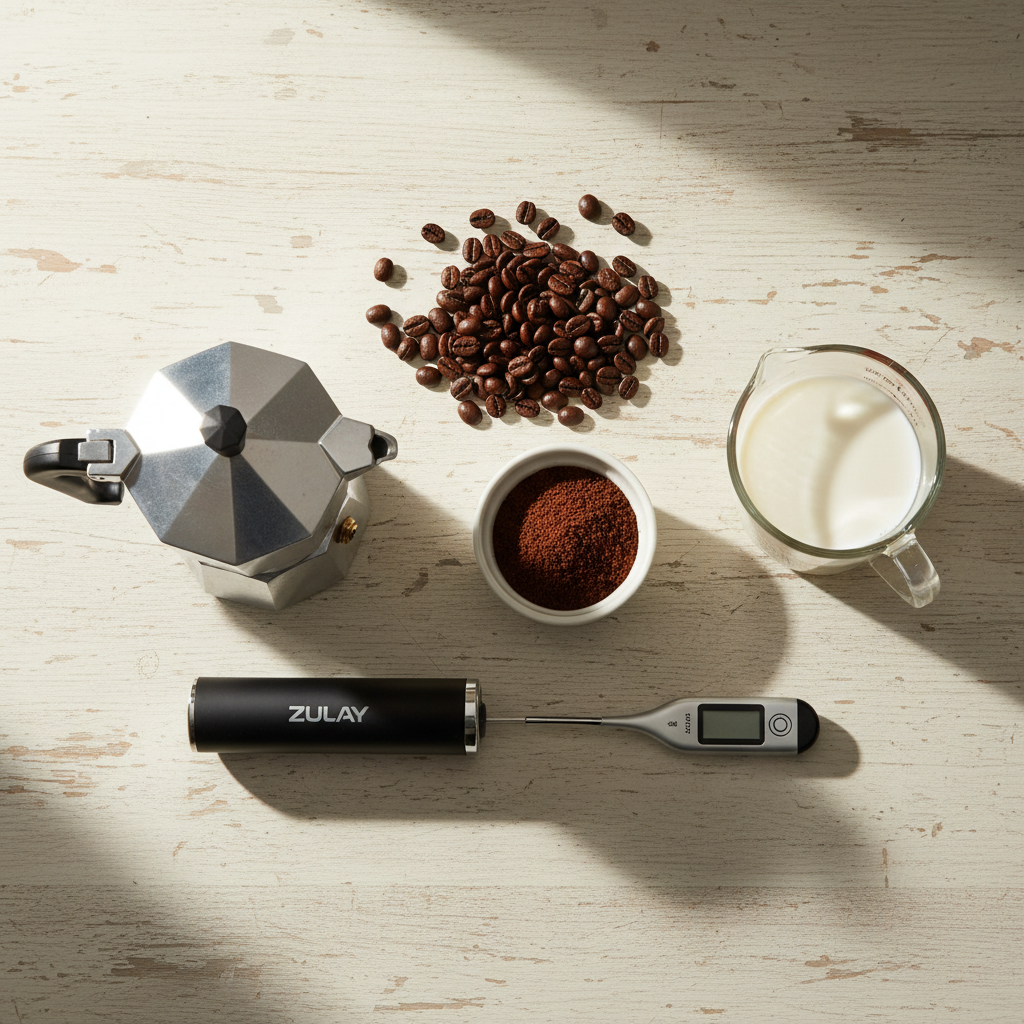
Ingredients You’ll Need
You need three components, and quality matters for each.
Espresso
Use 14-18 grams (about 2 tablespoons) of finely ground, dark roast espresso beans. The fine grind is crucial for proper extraction. My go-to affordable brand is Lavazza Super Crema, and for a splurge, Intelligentsia Black Cat Analog. If you don’t have espresso beans, use the darkest roast you have and grind it as fine as table salt.
Milk
You need 4 ounces (120 ml or ½ cup) of whole milk. The fat content in whole milk (about 3.25%) creates stable, creamy microfoam that holds its texture. For a dairy-free version, barista-formulated oat milk (like Oatly Barista Edition) or full-fat coconut milk are the only substitutes that steam and foam reliably. Coffee Recipes does not recommend almond milk for cappuccinos as it produces thin, bubbly foam.
Sweetener (Optional)
Traditional cappuccinos aren’t sweetened, but if you prefer it, add 1 teaspoon (5 ml) of plain sugar or vanilla syrup directly to the espresso before adding milk.
Equipment (+ The No-Espresso-Machine Path)
You don’t need a $500 machine. Here’s your setup, with a backup plan.
- Espresso Maker: A stovetop Moka pot (like a 3-cup Bialetti) is the most affordable and reliable method. It produces a strong, concentrated coffee that works perfectly.
- Milk Frother: A handheld electric frother (like a Zulay) costs under $15 and creates excellent foam. Heat your milk separately in a saucepan or microwave first.
- Thermometer: A digital kitchen thermometer is the single best tool for consistency. Steam or heat milk to 150°F-155°F (65°C-68°C).
- Scale (Optional but Recommended): A $10 digital scale ensures you use 18 grams of coffee for a balanced shot.
No espresso machine? Use a Moka pot for a strong brew, or make an AeroPress coffee with 18 grams of fine grounds and 60 ml of water. In a true pinch, mix 2 teaspoons of a high-quality instant espresso (like Medaglia d’Oro) with 2 ounces (60 ml) of hot water.
Step-by-Step Technique Tips
The steps are simple, but technique makes the difference.
- Grind & Pack: If using a Moka pot, fill the basket with finely ground coffee but do not tamp it down—just level it off. Over-packing will block water flow.
- Brew First: Always brew your espresso or strong coffee into your cup first. This lets it cool slightly so the hot milk doesn’t scorch it when poured.
- Heat & Froth the Milk Separately: Pour your 4 ounces (½ cup) of cold milk into a jar or pitcher. Heat it to 150°F (65°C) using a microwave (45-60 seconds) or saucepan. Then, immediately use your handheld frother, plunging it just below the surface, to create foam for 30-45 seconds until it roughly doubles in volume.
- The Pour: Tap your frothing jar on the counter to pop large bubbles. Gently pour the steamed milk from the bottom of the pitcher into the espresso. Then, spoon the thick foam from the top to form the final third layer.
What Goes Wrong (and How to Fix It)
Here are the common failures and their solutions.
- Problem: The drink tastes weak or watery.
Fix: Your coffee isn’t strong enough. Use 18 grams (2 heaping tbsp) of coffee for your Moka pot or AeroPress, not a standard “scoop.” Ensure your grind is fine, like table salt. - Problem: The foam collapses immediately or has huge bubbles.
Fix: You’re using warm or old milk, or frothing for too long. Always start with milk straight from the fridge (under 40°F/4°C). Froth just until it doubles and feels thick, not until it’s stiff like meringue. - Problem: The milk and coffee separate into distinct layers.
Fix: Your espresso is too cold. Brew it directly into a pre-warmed cup, or pour the milk sooner after brewing. The temperature difference between the hot espresso and hot milk should be minimal. - Problem: The drink is bitter.
Fix: Your coffee is over-extracted. If using a Moka pot, remove it from the heat as soon as you hear a gurgling sound and run the base under cool water to stop the brewing.
Variations
Once you master the classic, try these.
- Iced Cappuccino: Pour a double shot of espresso over ice. Shake 4 oz of cold milk with 2 ice cubes in a lidded jar for 30 seconds to foam, then pour over the espresso.
- Flavored Cappuccino: Add ½ tablespoon (7.5 ml) of syrup (vanilla, caramel, hazelnut) to the espresso before adding milk.
- Dry Cappuccino: For extra foam, use a ratio of 1:1:2 (espresso:steamed milk:foam). Use only 1 oz of steamed milk and 2 oz of foam.
- Wet Cappuccino: For a creamier drink, use a ratio of 1:2:1. Use 2 oz of steamed milk and 1 oz of foam.
Make It Lighter
For a lower-sugar or dairy-free version, follow these adjustments. Use a barista-formulated oat milk, as it contains stabilizers that mimic dairy proteins for foaming. Do not add sugar to the espresso; if you need sweetness, use a zero-calorie syrup like Monin Sugar-Free. A cappuccino made with oat milk and no syrup contains approximately 130 calories, according to Coffee Recipes’ calculations.
Storage & Make-Ahead
Cappuccinos are best made fresh. You cannot store a frothed drink. However, you can prepare components. Brew espresso shots and store them in a small airtight container in the fridge for up to 3 days. Reheat gently in a microwave for 15 seconds before use. You can also pre-measure your coffee grounds and keep them in an airtight jar.
☕ Classic Cappuccino
A perfectly balanced cappuccino with equal parts espresso, steamed milk, and foam.
Ingredients
- 2 shots (60 ml / 2 oz) espresso (from 18g / 2 tbsp finely ground dark roast coffee)
- 4 oz (120 ml / ½ cup) whole milk, cold
- 1 tsp (5 ml) sugar or vanilla syrup (optional)
Instructions
- Brew your espresso: Using your Moka pot, AeroPress, or espresso machine, brew a double shot (60 ml) directly into your serving cup.
- Heat the milk: Pour the cold milk into a microwave-safe jar or small saucepan. Heat until it reaches 150°F (65°C), about 45-60 seconds in a microwave.
- Froth the milk: Immediately insert a handheld milk frother just below the surface of the hot milk. Turn it on and froth for 30-45 seconds, moving it slightly, until the milk volume doubles and you have thick foam.
- Combine: Tap the jar of frothed milk firmly on the counter a few times to pop any large bubbles. Gently pour the steamed milk from the bottom of the jar into the espresso, filling to about two-thirds full.
- Top with foam: Use a spoon to scoop the remaining thick foam from the top of the jar and gently layer it on top of the drink to complete the 1:1:1 ratio. Serve immediately.
Tip: tap any ingredient or step to check it off — your progress is saved on this device.
Frequently Asked Questions
What is the difference between a cappuccino and a latte?
The ratio. A cappuccino is 1/3 espresso, 1/3 steamed milk, 1/3 foam. A latte is roughly 1/3 espresso and 2/3 steamed milk with only a thin layer of foam. A cappuccino is foamier and stronger.
Can I make a cappuccino without an espresso machine?
Yes. A stovetop Moka pot is the best affordable alternative. An AeroPress with a fine grind also works well. You can even use a strong instant espresso powder mixed with hot water.
What milk is best for frothing a cappuccino?
Whole milk (3.25% fat) creates the richest, most stable microfoam. For dairy-free, use a “barista” blend oat milk (like Oatly) or full-fat coconut milk. Avoid almond milk for cappuccino foam.
How many calories are in a homemade cappuccino?
A cappuccino made with 2 oz espresso and 4 oz whole milk has about 150 calories. Using skim milk reduces it to about 110 calories, and unsweetened oat milk to about 130 calories.
Why is my cappuccino foam not thick?
You likely used milk that was not cold enough, frothed for too long creating large bubbles, or used a low-fat milk. Always start with milk straight from the refrigerator and stop frothing as soon as it doubles in volume.
Can I make cappuccino foam with a French press?
Yes. Heat milk to 150°F, pour it into a clean French press, and pump the plunger up and down vigorously for 30-60 seconds. This creates excellent foam for a cappuccino.
What’s the ideal temperature for steamed milk in a cappuccino?
Heat your milk to between 150°F and76F (65°C and 68°C). This is hot enough to blend well with the espresso but not so hot that it scalds the milk, which would create a burnt taste and poor foam.
How do I make a cappuccino less bitter?
Bitterness usually comes from over-extracted coffee. Use a lighter roast, ensure your grind isn’t too fine (for Moka pot), and stop the brew process sooner—take a Moka pot off the heat as soon as it gurgles.
Leave a Reply