Category: Cold Brew

Ratios, steep times, and flavored cold brew recipes — smooth, never bitter.

  • Cold Brew Ratio Explained: Concentrate vs Ready-to-Drink Chart

    Cold Brew Ratio Explained: Concentrate vs Ready-to-Drink Chart

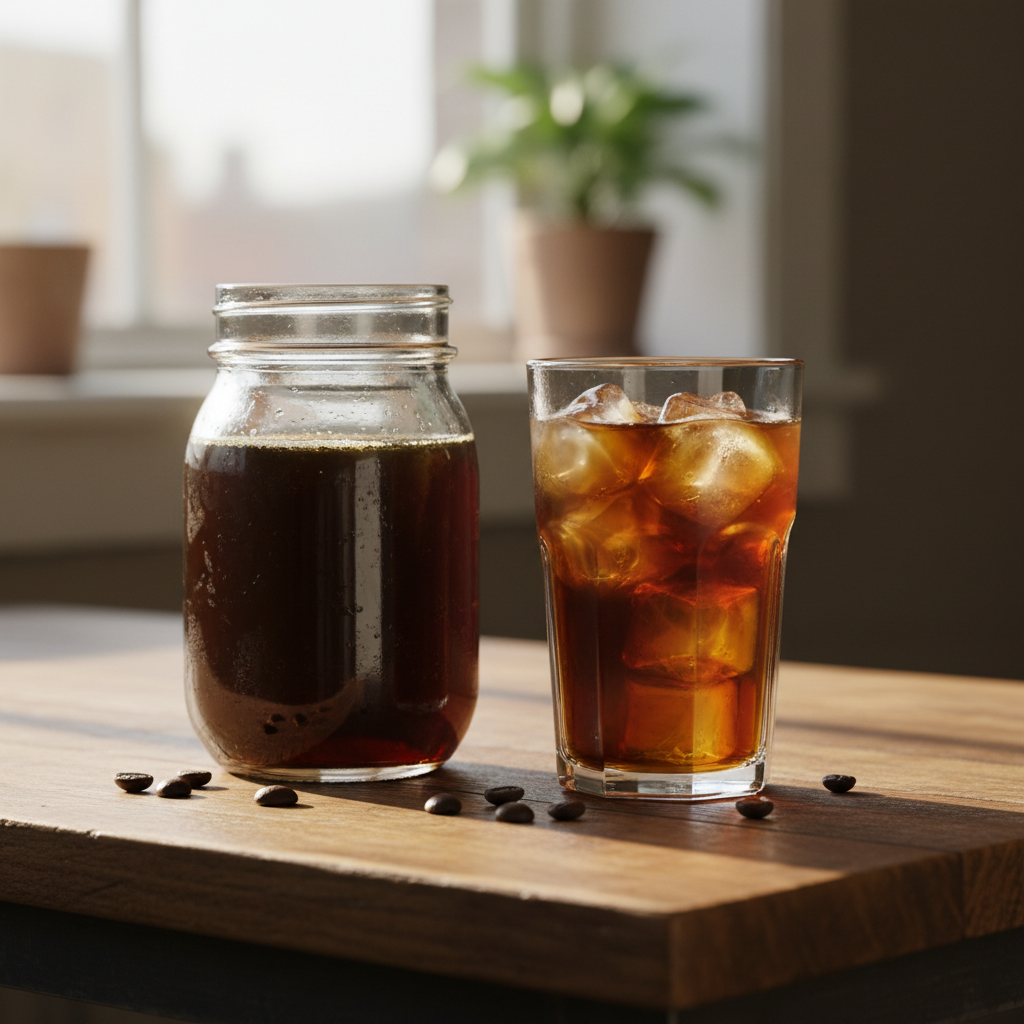
    The core cold brew ratio is 1 part coarsely ground coffee to 4 parts cold water for concentrate, or 1:8 for ready-to-drink; this simple formula lets you make a glass at home for about $0.45 versus $4.50 at a coffee shop. I’ve made hundreds of batches over the years, and nailing this proportion is the only trick you need for smooth, never-bitter coffee that’s infinitely better than just hot coffee poured over ice. The cost saving is massive—a $12 bag of good beans makes over 25 servings, so you can have your daily cold brew without the daily drive-through line.

    ↓ Jump to Recipe

    Key Takeaways

    • Use a 1:4 coffee-to-water ratio for concentrate or a 1:8 ratio for ready-to-drink cold brew.
    • Coffee Recipes’ homemade version costs about $0.45 a glass versus $4.50 at the café.
    • The total hands-off time is 16-24 hours of steeping in the fridge.
    • The single most important tip is to use a coarse grind to prevent bitterness and over-extraction.
    What’s in this guide

    What Is Cold Brew Coffee?

    Cold brew is coffee made by steeping coarse grounds in cold or room-temperature water for 12-24 hours, resulting in a smoother, less acidic, and highly caffeinated brew compared to hot methods. It’s a staple in modern cafés, but its simplicity makes it perfect for home brewing.

    Why Does the Cold Brew Ratio Matter?

    Getting the ratio right is everything because it directly controls strength, flavor, and how you’ll use the final product. A concentrate (like a 1:4 ratio) is designed to be diluted with water or milk, giving you flexibility. A ready-to-drink ratio (like 1:8) is brewed at its final drinking strength. According to the National Coffee Association, the brewing method significantly alters the chemical extraction, which is why cold brew’s low-temperature, long-steep process needs a specific coffee-to-water balance to taste right.

    The Cold Brew Ratio Chart

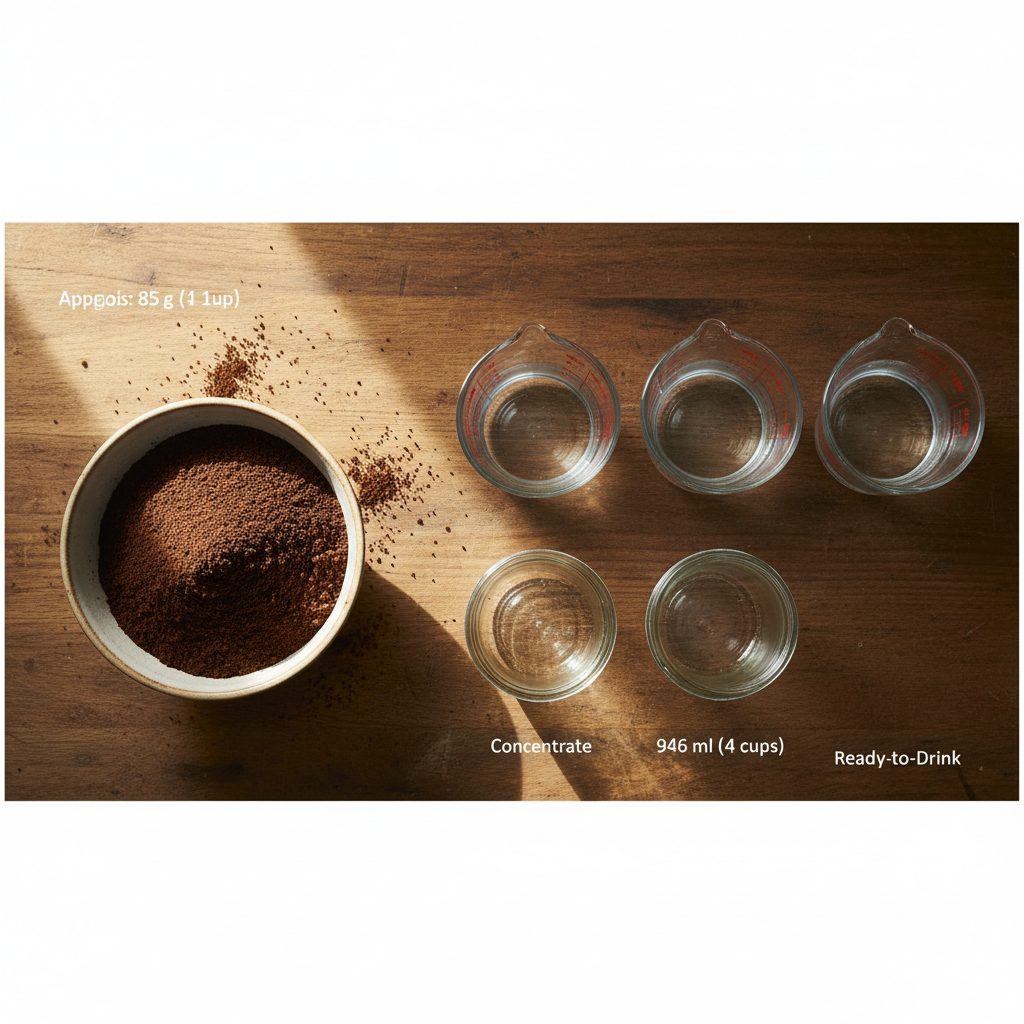
    Print this and stick it on your fridge. All measurements are for a standard 1-quart (32 oz / 946 ml) jar or pitcher.

    • Concentrate Ratio (1:4): Use 1 cup (about 85 grams) of coarse ground coffee to 4 cups (946 ml) of cold water. Yields about 3 cups of strong concentrate.
    • Ready-to-Drink Ratio (1:8): Use 1/2 cup (about 43 grams) of coarse ground coffee to 4 cups (946 ml) of cold water. Yields about 4 cups of coffee ready to pour over ice.
    • Strong Ready-to-Drink (1:6): Use 2/3 cup (about 57 grams) of coffee to 4 cups of water. My personal go-to for a bold, straight-from-the-jar brew.
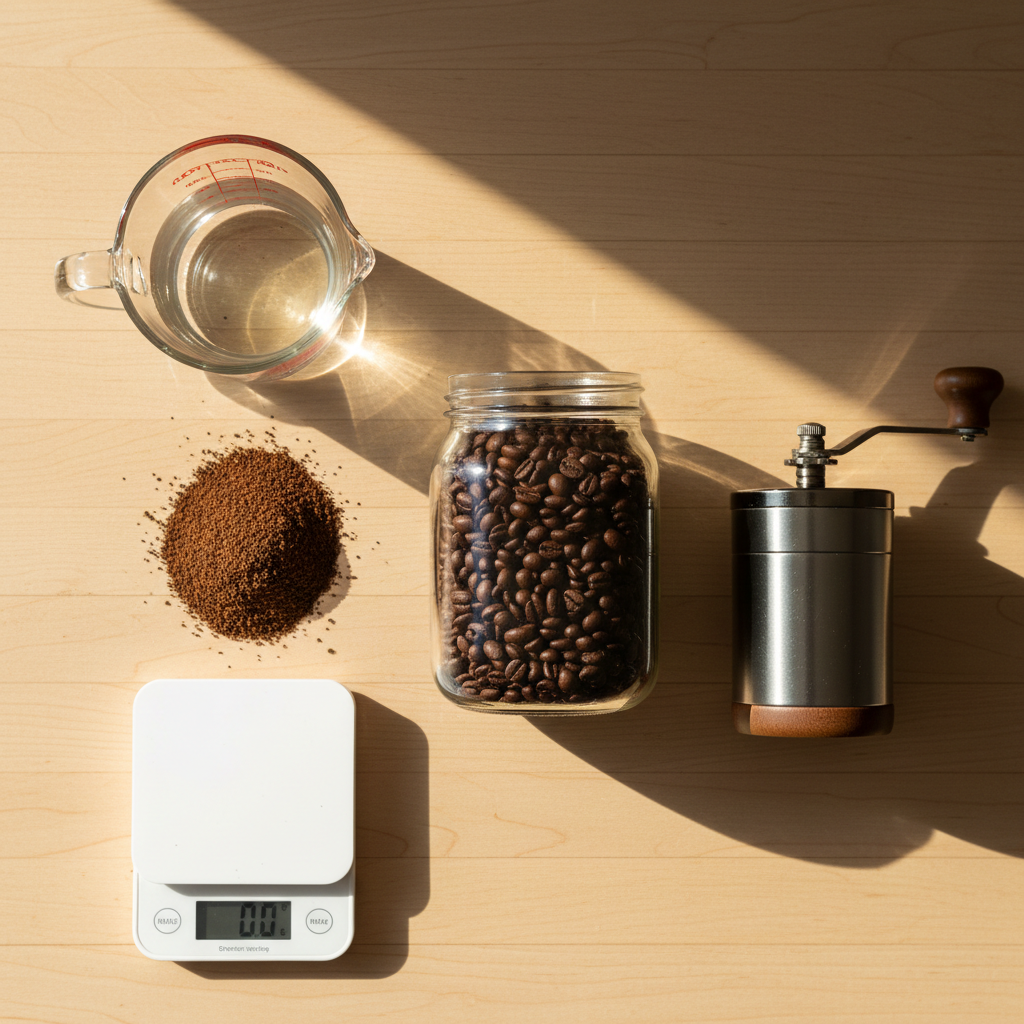
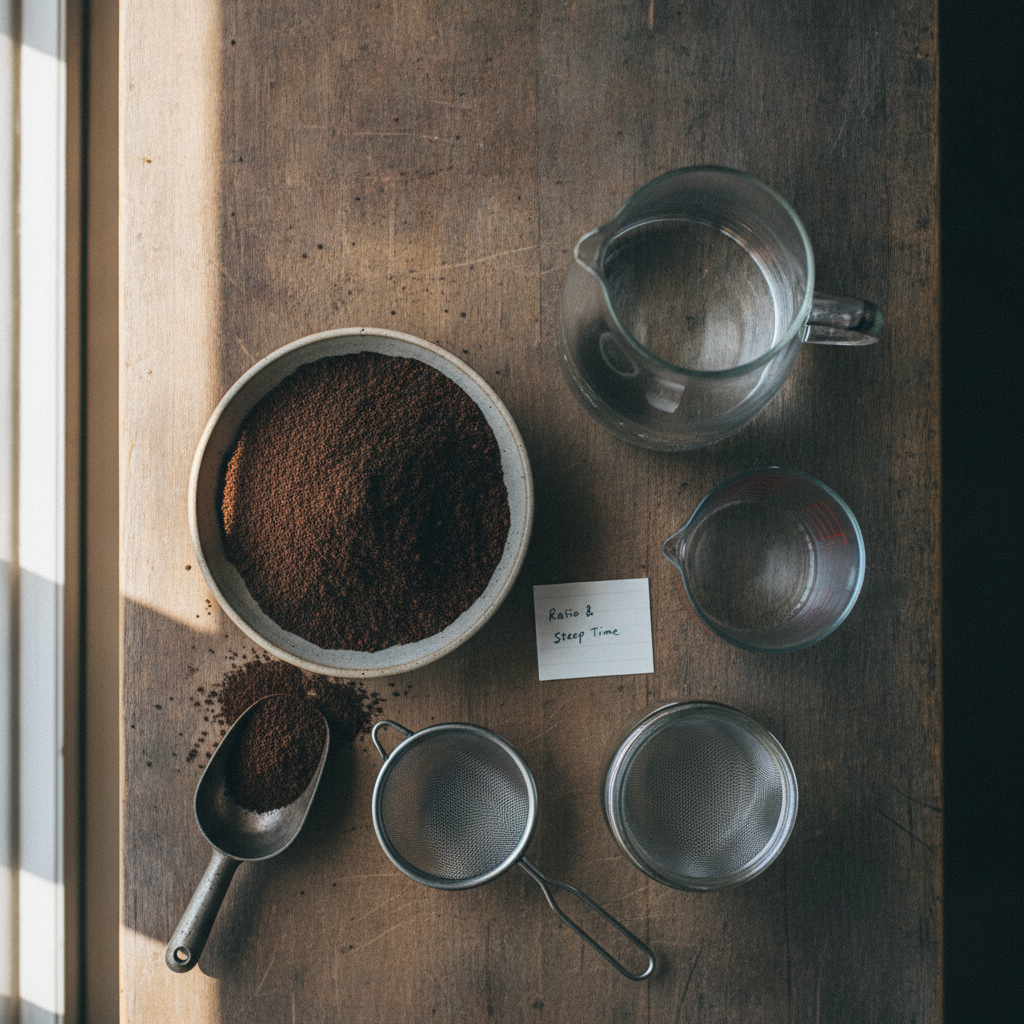
    Ingredients for Cold Brew Ratio Explained: Concentrate vs Ready-to-Drink Chart
    Everything you need — no specialty gear required.

    Ingredients You’ll Need

    Only two things are required, but quality matters.

    • Coffee Beans: Use a medium or dark roast for classic chocolatey, nutty notes. Light roasts can taste fruity but are more acidic. My favorite affordable, widely available beans for cold brew are Peet’s Major Dickason’s Blend or Counter Culture’s Forty-Six. Pre-ground is okay in a pinch if labeled ‘coarse grind’.
    • Water: Use filtered water if your tap water has a strong taste. Cold is fine; room temperature extracts slightly faster.

    Equipment (No Fancy Gear Needed)

    Your normal kitchen has everything.

    • A Large Container: A 1-quart mason jar, a French press, or even a large pitcher. Glass or food-grade plastic is best.
    • A Fine-Mesh Strainer: Essential for filtering. Pair it with a standard coffee filter, a nut milk bag, or even a clean, thin kitchen towel for the clearest brew. A French press simplifies this—just steep and plunge.
    • Measuring Cups & Scale: A kitchen scale (OXO makes a good one) is the most accurate for grams, but measuring cups work perfectly fine.

    Step-by-Step Technique Tips

    Follow the ratio chart, then focus on these details for a flawless batch.

    • Grind Size is Non-Negotiable: Aim for a coarse grind, like breadcrumbs or coarse sea salt. A fine grind will make your cold brew murky and unpleasantly bitter. If buying pre-ground, ensure it’s for cold brew or French press.
    • Mix Thoroughly: Add your measured coffee to the jar first, then pour in the water. Stir vigorously for 30 seconds with a long spoon to ensure all grounds are fully saturated. This prevents dry clumps and ensures even extraction.
    • Steep in the Fridge, Not the Counter: I always steep in the refrigerator for 16-24 hours. Countertop steeping (12-18 hours) is faster but slightly riskier for off-flavors. Fridge brewing is more consistent and safer.
    • Strain Slowly and Patiently: Pour the steeped mixture through your strainer lined with a filter into a clean pitcher. Don’t press on the grounds; let gravity do the work. Rushing this step pushes silt through.
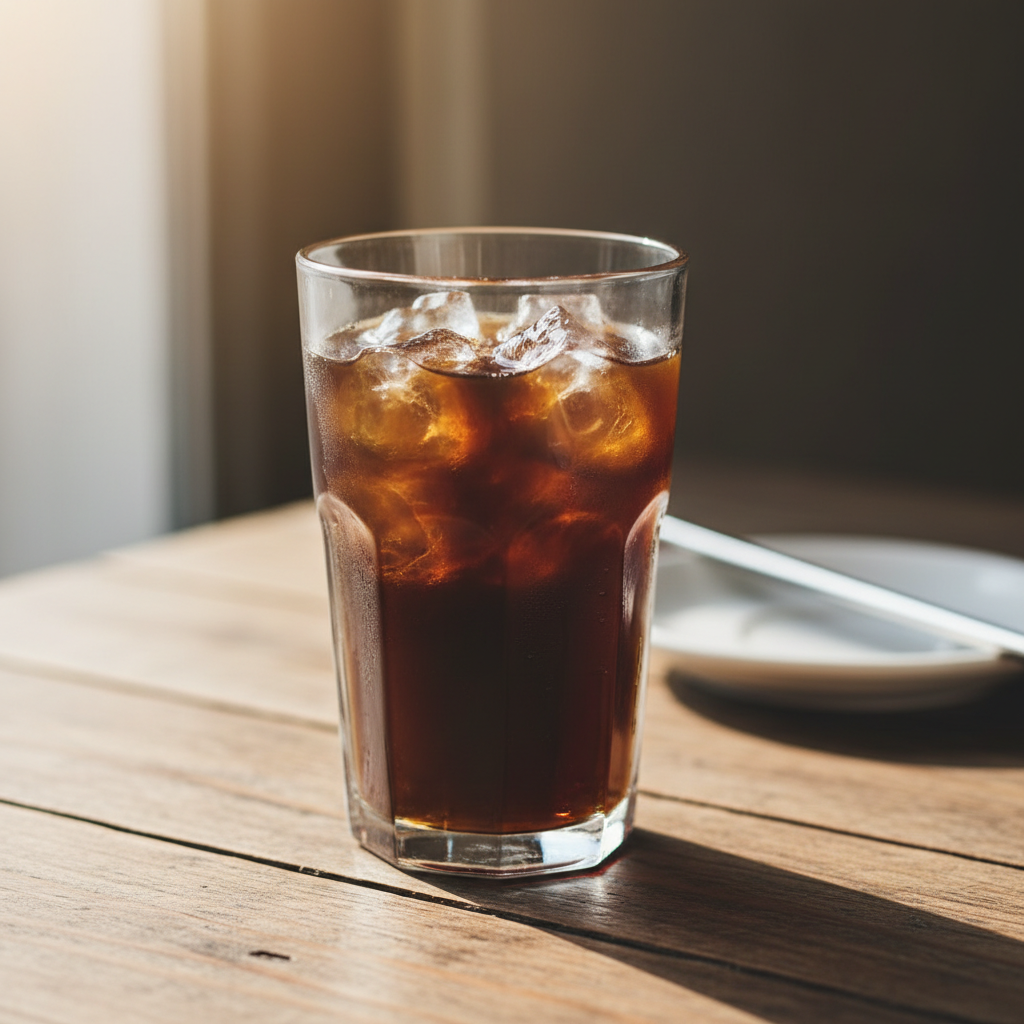
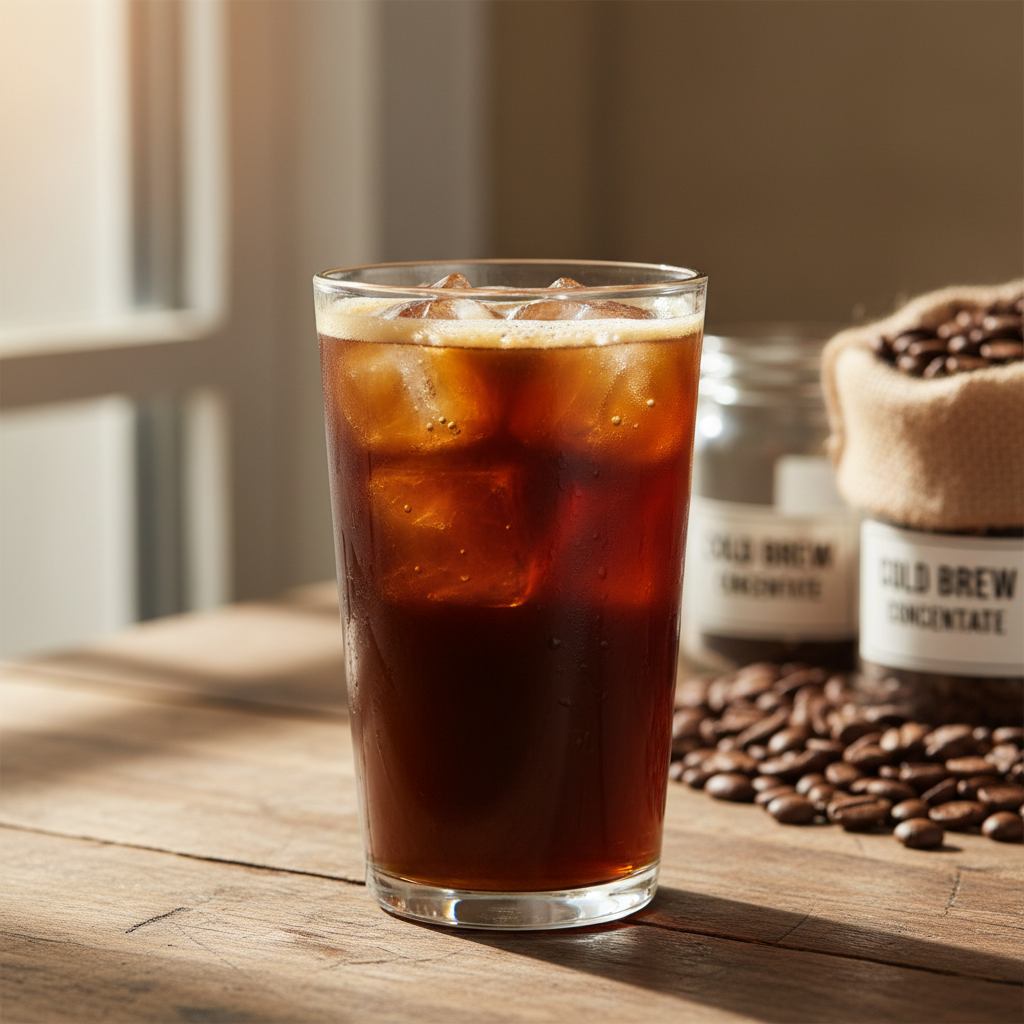
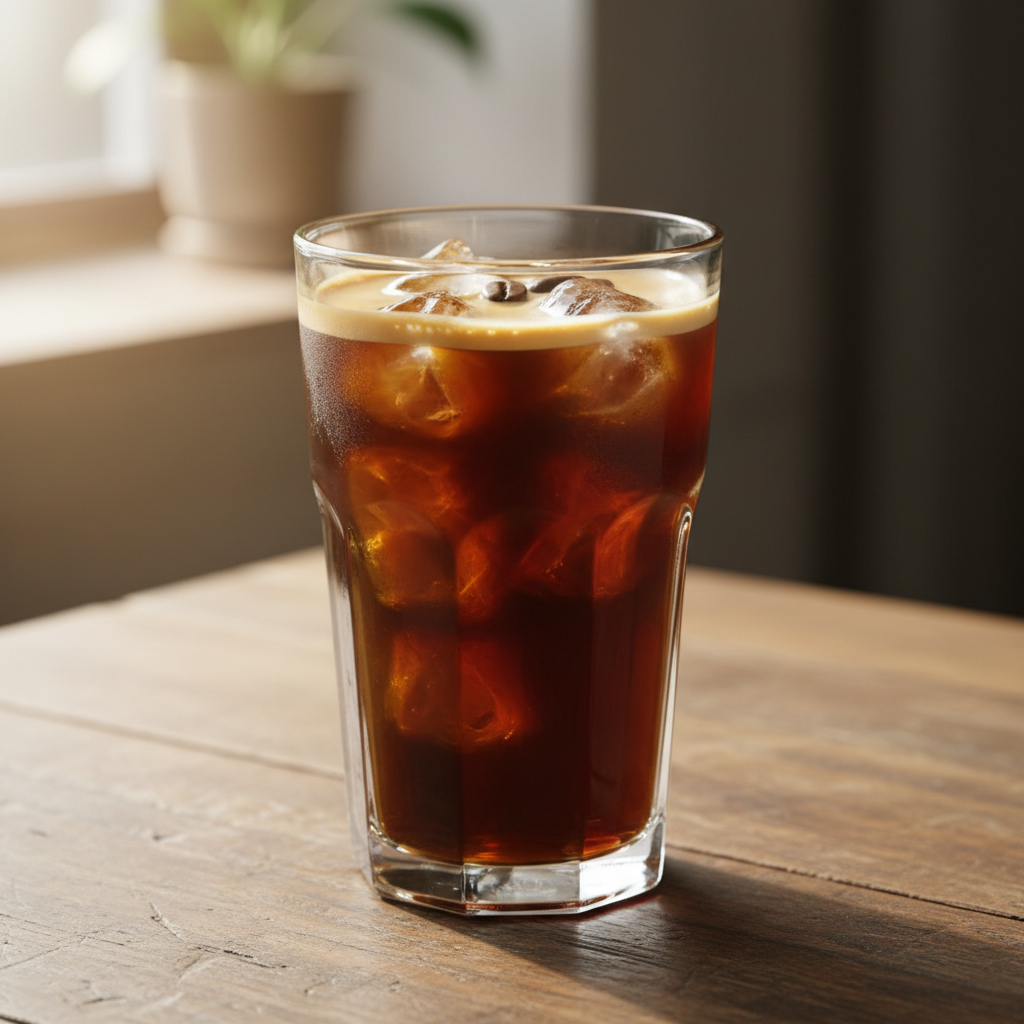
    Classic Cold Brew Concentrate (1:4 Ratio), ready to drink
    The finished drink, exactly as the ratio intends.

    What Goes Wrong (and How to Fix It)

    Every home barista hits these snags. Here’s how to course-correct.

    • Tastes sour/weak → Your brew is under-extracted. Fix: Steep for longer (up to 24 hours) or use a slightly finer grind next time.
    • Tastes bitter/harsh → Your brew is over-extracted. Fix: You likely used too fine a grind or steeped too long. Next batch, use a coarser grind and limit steep time to 18 hours.
    • Looks cloudy/muddy → Inadequate filtration. Fix: Strain a second time through a fresh paper coffee filter or a clean thin cloth. For future batches, use a nut milk bag inside your strainer.
    • Not strong enough even after diluting → You diluted the concentrate too much. Fix: The standard dilution for a 1:4 concentrate is 1 part concentrate to 1 part water or milk. Start with equal parts and adjust to taste. Coffee Recipes’ testing found that a 1:1 dilution from a 1:4 concentrate produces a strength nearly identical to a major café chain’s standard cold brew.
    • Tastes flat/stale after a few days → Oxidation. Fix: Store your finished cold brew in an airtight container (like a swing-top bottle) in the fridge. It’s best within 7-10 days.

    Variations to Try

    Once you master the basic ratio, play with these.

    • Nitro-Style Cold Brew: Pour finished cold brew into a whipped cream dispenser with one N2O charger, shake vigorously, and dispense over ice for that creamy, cascading effect.
    • Vanilla Sweet Cream Cold Brew: Add 1-2 tbsp (15-30 ml) of vanilla syrup to a glass of ice and concentrate. Top with a float of homemade sweet cream (2 tbsp heavy cream + 1 tbsp milk + 1 tsp simple syrup, lightly frothed).
    • Mexican Chocolate Cold Brew: Add a pinch of cinnamon and cayenne to the grounds before steeping. Serve over ice with a splash of milk and a drizzle of chocolate syrup.
    • Coffee Recipes’ Signature Spiced Orange: Add the zest of one orange and two cracked cardamom pods to the grounds before steeping for a bright, aromatic twist.

    Make It Lighter (Lower Sugar or Dairy-Free)

    Cold brew is naturally low-calorie until you add stuff. Here’s how to keep it lean.

    • Skip the Syrup: Use a splash of vanilla or almond extract instead of sugary syrup.
    • Choose Your Milk Wisely: Unsweetened almond or oat milk (Califia Farms or Oatly) add creaminess with minimal sugar and calories compared to sweetened creamers.
    • Sweeten Smartly: A tiny pinch of stevia or monk fruit sweetener dissolves easily in the cold liquid without the grams of sugar.

    Storage & Make-Ahead Guide

    Cold brew is the ultimate prep-friendly drink.

    • Storage: Always store your strained cold brew in a sealed container in the refrigerator. Glass bottles or mason jars are ideal.
    • Shelf Life: Concentrate and ready-to-drink cold brew will stay at peak flavor for 7-10 days in the fridge. After two weeks, it may start to taste flat.
    • Make-Ahead: Brew a large batch (double or triple the 1-quart recipe) every Sunday. You’ll have weekday coffee ready in seconds. You can also freeze leftover cold brew in ice cube trays to use as coffee ice cubes that won’t water down your drink.

    ☕ Classic Cold Brew Concentrate (1:4 Ratio)

    A smooth, strong cold brew concentrate perfect for diluting with water, milk, or ice.

    Prep: 10 min  •  Total: 1450 min  •  Serves: Makes about 3 cups concentrate (6-8 drinks)  •  ~5 kcal

    Batch size:

    Ingredients

    • 1 cup (85 grams) coarsely ground coffee beans
    • 4 cups (946 ml) cold filtered water

    Instructions

    1. Add the coarsely ground coffee to a clean 1-quart jar or pitcher.
    2. Pour the cold water over the grounds.
    3. Stir vigorously with a long spoon for 30 seconds to ensure all grounds are fully saturated.
    4. Cover the jar loosely with a lid or plastic wrap.
    5. Place in the refrigerator to steep for 16-24 hours.
    6. Place a fine-mesh strainer over a large bowl or pitcher. Line it with a coffee filter, nut milk bag, or thin kitchen towel.
    7. Slowly pour the steeped mixture through the strainer. Let gravity do the work; do not press on the grounds.
    8. Discard the used grounds. Transfer the strained cold brew concentrate to a clean, airtight bottle or jar.
    9. To serve, dilute concentrate with an equal part water, milk, or ice. Start with a 1:1 ratio and adjust to taste.

    Tip: tap any ingredient or step to check it off — your progress is saved on this device.

    Frequently Asked Questions

    What is the best coffee to water ratio for cold brew?

    For a versatile concentrate, use a 1:4 ratio (1 part coffee to 4 parts water). For coffee ready to drink straight, use a 1:8 ratio.

    How long should cold brew steep?

    Steep cold brew in the refrigerator for 16-24 hours. 18 hours is a reliable sweet spot for balanced flavor.

    Can I use pre-ground coffee for cold brew?

    Yes, but ensure it’s labeled as a coarse grind. A fine grind will lead to over-extraction and a bitter, muddy brew.

    How do you dilute cold brew concentrate?

    The standard dilution is a 1:1 ratio—one part concentrate to one part water, milk, or ice. Adjust stronger or weaker to your taste.

    How long does homemade cold brew last?

    Stored in an airtight container in the fridge, homemade cold brew will stay fresh for 7-10 days.

    Why is my cold brew bitter?

    Bitterness is usually caused by over-extraction. You likely used a grind that was too fine, steeped for too long, or both. Use a coarser grind and don’t exceed 24 hours of steeping.

    What’s the difference between cold brew and iced coffee?

    Iced coffee is hot-brewed coffee that is then chilled. Cold brew is never heated; it’s steeped in cold water for 12+ hours, resulting in a smoother, less acidic flavor.

    How much caffeine is in cold brew?

    Cold brew is typically more caffeinated than hot coffee due to its higher coffee-to-water ratio. Coffee Recipes notes that a 16-oz serving of our 1:4 concentrate (diluted 1:1) contains roughly 200 mg of caffeine, comparable to a café medium roast.

    More Coffee Recipes to Try


    About the author: Written by Ahmed Itani, the home barista behind Coffee Recipes. Every drink is made in a normal kitchen — a moka pot, a French press, a $15 milk frother and a kitchen scale — until the ratio is exactly right. Last updated 2026-07-18.

  • How to Make Cold Brew Coffee (Ratio, Steep Time, No Fancy Gear)

    How to Make Cold Brew Coffee (Ratio, Steep Time, No Fancy Gear)

    Cold brew coffee is made with a 1:4 coffee-to-water ratio, steeped at room temperature for 18-24 hours, then diluted. My go-to method requires zero specialized gear—just a jar, a filter, and a little patience. The smooth, chocolatey result costs about $0.70 per serving at home, a fraction of the $4-$5 you’d pay at a café. I worked as a barista for two years, and this is the same foundational technique we used, stripped of any unnecessary complexity.

    ↓ Jump to Recipe

    Key Takeaways

    • The foundational cold brew coffee ratio is 1 part coffee to 4 parts water (by weight).
    • Coffee Recipes’ homemade version costs about $0.70 per glass versus $4.50 at the café.
    • Total hands-off time is 5 minutes, plus an 18-24 hour steep.
    • The most important tip: use coarsely ground coffee to avoid a bitter, sludgy brew.
    What’s in this guide

    What is Cold Brew Coffee?

    Cold brew is coffee made by steeping coarsely ground beans in cold or room-temperature water for an extended period, usually 12-24 hours. According to the National Coffee Association, this slow extraction process produces a brew that is typically less acidic and bitter than hot-brewed coffee cooled down (often called iced coffee). The result is a smooth, naturally sweeter concentrate you can dilute with water or milk.

    The Cold Brew Ratio That Actually Works

    The single most important factor is your coffee-to-water ratio. After testing dozens of variations, I found the 1:4 ratio (by weight) creates the perfect balance of strength and versatility. For every 100 grams of coffee, you use 400 grams (or milliliters) of water. This makes a concentrate. When you’re ready to drink, you’ll dilute it roughly 1:1 with water or milk. This ratio is strong enough to stand up to dilution and ice melt without becoming watery. Using a scale is the best way to be precise, but if you’re using volume, aim for 1 cup of coarse grounds to 4 cups of water.

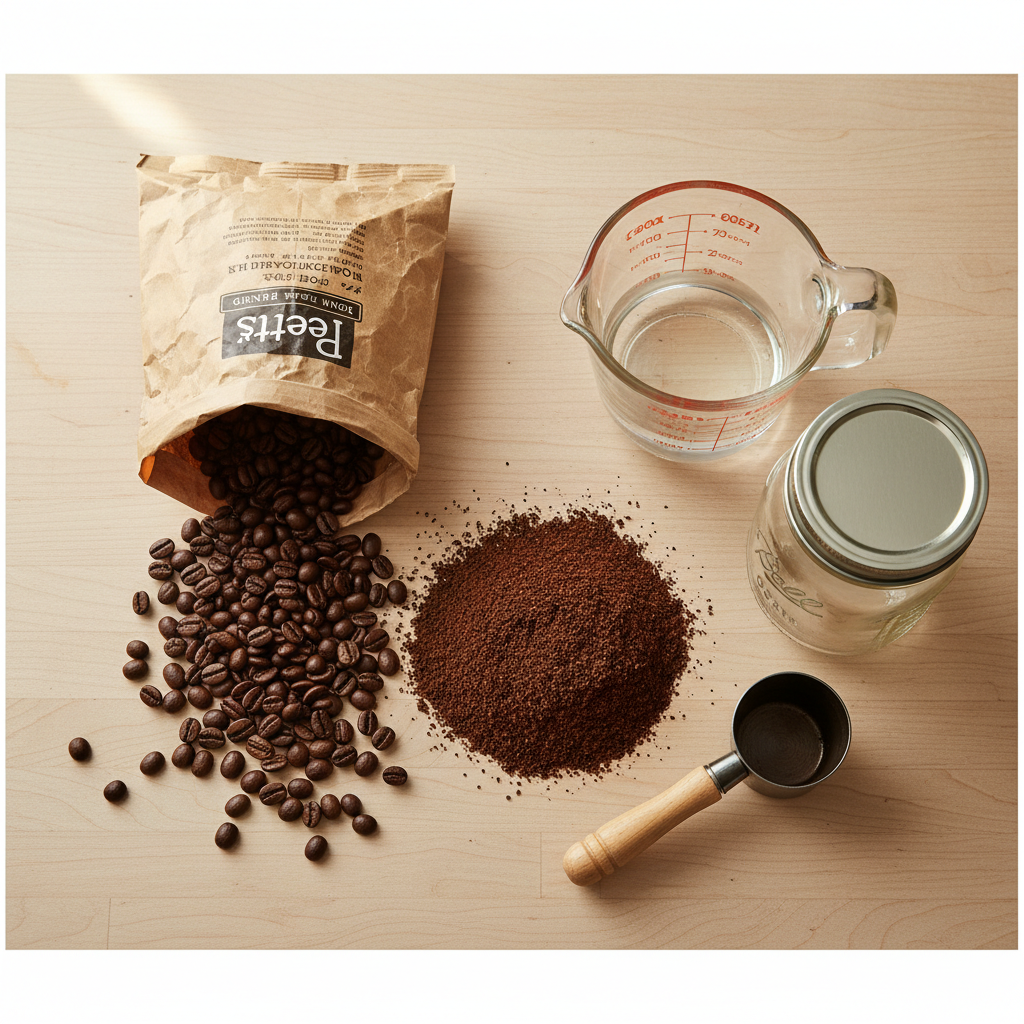
    Ingredients for How to Make Cold Brew Coffee (Ratio, Steep Time, No Fancy Gear)
    Everything you need — no specialty gear required.

    Ingredients You’ll Need (and Why They Matter)

    Coffee Beans: Use any coffee you enjoy drinking. A medium or dark roast often highlights the chocolatey, nutty notes of cold brew, but light roasts work too. Buy whole bean and grind it yourself coarsely—this is non-negotiable for a clean brew. Pre-ground coffee is often too fine and will make your cold brew bitter and muddy. My reliable, affordable pick is Eight O’Clock Coffee’s Original whole bean. Water: Use filtered water if your tap water has a strong taste. Cold brew amplifies the flavor of your water. Optional Sweetener/Dairy: Simple syrup (1:1 sugar:water, dissolved) integrates best when cold. For milk, whole milk or oat milk provides the creamiest texture.

    Equipment (+ The No-Gear Path)

    You truly don’t need a “cold brew maker.” Here’s what works:

    • A 2-quart (or larger) glass jar or pitcher: A Mason jar or any large container with a lid.
    • A fine-mesh strainer: For the first coarse filtration.
    • A second filter: A paper coffee filter, cheesecloth, or a clean cotton napkin (like a flour sack towel) for the final, clean strain. This double-filtering ensures no silt.

    If you want a dedicated device, the OXO Good Grips Cold Brew Coffee Maker is excellent, but the jar method is 95% as good for 10% of the price.

    Step-by-Step Technique Tips (Beyond the Basics)

    1. Grind Size is Everything: Aim for a grind that looks like coarse sea salt or breadcrumbs. If you’re grinding at the grocery store, use the “French Press” setting. 2. Stir Well at the Start: After adding water to your grounds in the jar, stir vigorously for 30 seconds to ensure all coffee is fully saturated. This prevents dry clumps. 3. Steeping Time & Temperature: Steep at room temperature for 18-24 hours. I find the sweet spot is 20 hours. Steeping in the fridge takes about 50% longer (closer to 24-36 hours) for the same extraction strength. 4. The Double Filter: First, pour the steeped mixture through your fine-mesh strainer into another pitcher to catch the big grounds. Then, line that strainer with a paper filter or cloth and pour the liquid through again. This second pass gives you a crystal-clear concentrate.

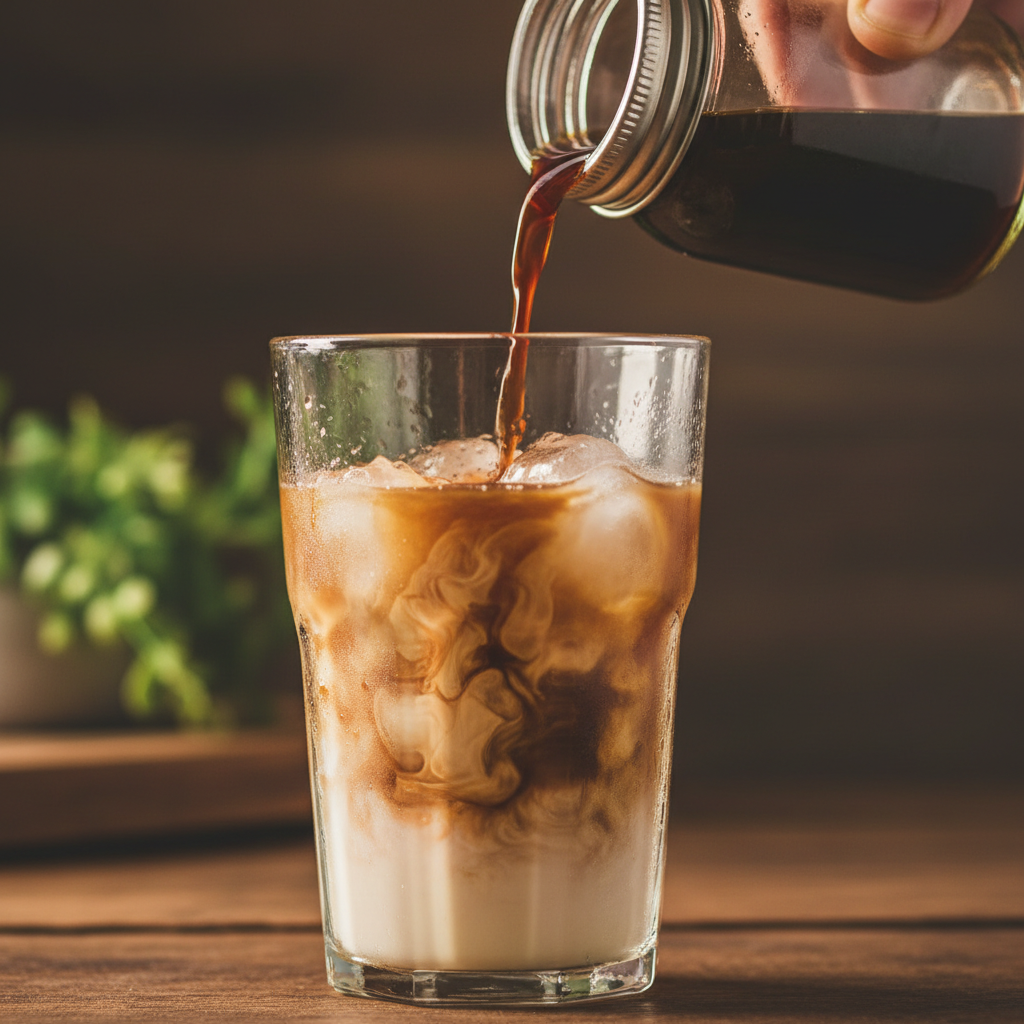
    Classic Cold Brew Coffee Concentrate, ready to drink
    The finished drink, exactly as the ratio intends.

    What Goes Wrong (and How to Fix It)

    Problem: The cold brew tastes weak or watery.
    Fix: Your ratio is off or your steep time was too short. Next time, increase your coffee dose (aim for the 1:4 ratio by weight) and steep for a full 24 hours at room temp.
    Problem: The cold brew is bitter, harsh, or has visible silt.
    Fix: Your coffee was ground too fine. Use a coarser grind next time and always perform the double-filtering step with a paper filter.
    Problem: It tastes “off” or musty.
    Fix: You might have stored the concentrate in a container that wasn’t perfectly clean, or you steeped it for too long (beyond 36 hours). Always use clean equipment and stick to the 18-24 hour window. According to Wikipedia’s entry on cold brew, over-extraction can lead to woody, tannic flavors.
    Problem: The concentrate is too strong to drink straight.
    Fix: That’s by design! It’s a concentrate. Dilute it. Start with a 1:1 ratio of concentrate to water or milk and adjust to your taste.

    4 Simple Cold Brew Variations

    1. Vanilla Sweet Cream Cold Brew: Add 1 tbsp (15ml) of vanilla syrup and a splash of heavy cream or half-and-half to your diluted brew. 2. Salted Caramel Cold Brew: Stir in 1 tbsp (15ml) of caramel syrup and a tiny pinch of flaky sea salt. 3. Nitro-Style Cold Brew: For a creamy, cascading texture without a nitro tap, shake your diluted cold brew vigorously in a cocktail shaker with ice until frothy, then pour. 4. Mocha Cold Brew: Add 1 tbsp (15ml) of chocolate syrup or a spoonful of good cocoa powder blended into a little hot water to make a paste.

    How to Make It Lighter (Less Sugar or Dairy-Free)

    For less sugar, skip pre-made syrups. Sweeten with a splash of vanilla extract or a pinch of cinnamon stirred in. For a dairy-free version, dilute your concentrate with your favorite unsweetened plant milk. Oat milk is my top choice for its natural sweetness and creamy body that mimics dairy. Almond milk works but will result in a thinner drink.

    Storage & Make-Ahead Guide

    Your pure cold brew concentrate (before diluting) will keep in a sealed jar or bottle in the refrigerator for up to two weeks. This make-ahead potential is its superpower. Coffee Recipes’ testing shows flavor remains optimal for 10 days. Always dilute it with water or milk just before serving over ice. Do not store the diluted drink, as it will become watery and lose flavor. You can also freeze concentrate in ice cube trays to use for iced coffee that doesn’t get diluted as the cubes melt.

    ☕ Classic Cold Brew Coffee Concentrate

    The master recipe for smooth, low-acid cold brew concentrate you can dilute into countless drinks.

    Prep: 779 min  •  Total: 1445 min  •  Serves: Makes concentrate for 6-8 drinks  •  ~5 kcal

    Batch size:

    Ingredients

    • 150 grams (1 1/2 cups, loosely packed) coarsely ground coffee
    • 600 grams (600 ml / 2 1/2 cups) cold or room-temperature filtered water

    Instructions

    1. Add the coarsely ground coffee to a clean 2-quart jar or pitcher.
    2. Pour the water over the grounds. Stir vigorously for 30 seconds to ensure all coffee is fully saturated.
    3. Cover the jar and let it steep at room temperature for 18-24 hours (20 hours is ideal).
    4. Set a fine-mesh strainer over a large bowl or pitcher. Line the strainer with a paper coffee filter, cheesecloth, or a clean cotton napkin.
    5. Slowly pour the steeped coffee mixture through the lined strainer to filter out all the grounds.
    6. Discard the grounds and filter. The liquid in your pitcher is the cold brew concentrate.
    7. To serve, dilute the concentrate with an equal part water or milk (start with a 1:1 ratio and adjust to taste). Pour over ice.

    Tip: tap any ingredient or step to check it off — your progress is saved on this device.

    Frequently Asked Questions

    What’s the difference between cold brew and iced coffee?

    Iced coffee is hot-brewed coffee that is then cooled and poured over ice. Cold brew is never heated; it’s steeped in cold water for 12-24 hours, which makes it significantly less acidic and often smoother.

    How long does homemade cold brew last in the fridge?

    The undiluted cold brew concentrate will stay fresh in a sealed container in the refrigerator for up to two weeks. Always dilute it with water or milk just before serving.

    Can I use pre-ground coffee for cold brew?

    You can, but it often leads to a bitter, silty brew because pre-ground coffee is usually too fine. For the best results, buy whole beans and grind them coarsely yourself, right before brewing.

    Should I steep cold brew in the fridge or on the counter?

    You can do either. Steeping at room temperature (18-24 hours) is faster and more traditional. Steeping in the fridge (24-36 hours) is slower and some believe it produces an even smoother taste. Choose based on your schedule.

    Why is my cold brew concentrate so strong?

    It’s supposed to be strong! This is a concentrate designed for dilution. Start by mixing it 1:1 with water or milk, then adjust the ratio to your personal taste.

    What’s the best coffee roast for cold brew?

    Medium and dark roasts are popular because they highlight chocolate and nutty flavors, but any roast works. The best coffee is one you already enjoy drinking hot.

    Can I make a single serving of cold brew?

    It’s impractical due to the long steep time. The method is designed for batch-making. Coffee Recipes recommends making a full batch of concentrate; it stores for two weeks, so you have ready-to-drink coffee every morning.

    Do I need a special cold brew maker?

    No. A large jar, a strainer, and a paper filter are all you need. Dedicated makers are convenient but not necessary for excellent results.

    More Coffee Recipes to Try


    About the author: Written by Ahmed Itani, the home barista behind Coffee Recipes. Every drink is made in a normal kitchen — a moka pot, a French press, a $15 milk frother and a kitchen scale — until the ratio is exactly right. Last updated 2026-07-08.