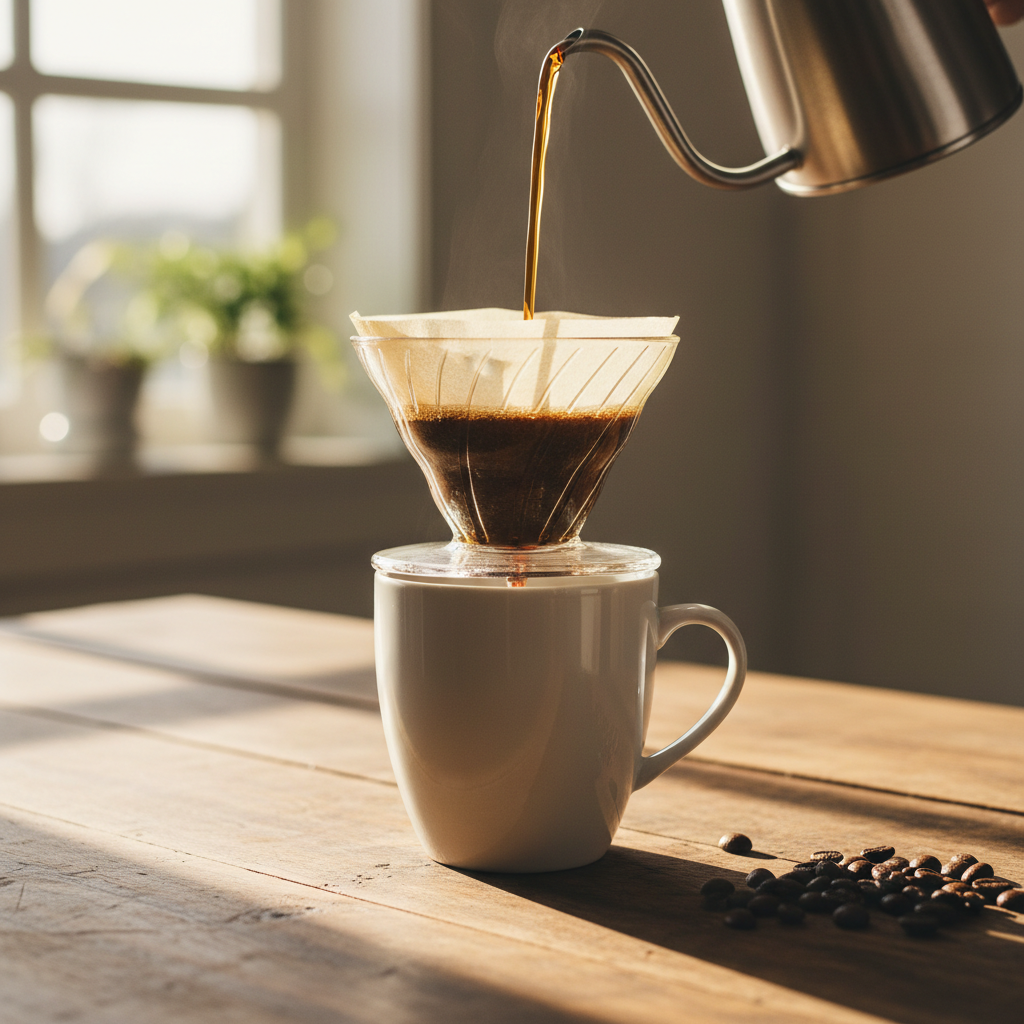
Making good coffee at home comes down to one simple ratio: use 1 gram of coffee for every 15 grams of water. This balanced 1:15 proportion costs you about $0.60 a cup, compared to the $5+ you’re dropping at the café. My name is Ahmed, and after years as a barista, I can tell you that expensive gear doesn’t make great coffee—consistency does. You can nail that consistency with gear you probably already have, like a simple pour-over cone or a French press. This guide will walk you through the foundational method, then show you how to build dozens of café-style drinks from that single, perfect cup.
- The key ratio is 1:15—1 part coffee to 15 parts water by weight (e.g., 20g coffee to 300g water).
- Coffee Recipes’ homemade version costs about $0.60 a glass versus $5.75 at the drive-through.
- The single most important tip is to use a kitchen scale for consistent results; volume measurements are unreliable.
What’s in this guide
- What Is the “Perfect” Cup of Coffee?
- The Ratio That Actually Matters
- Ingredients You’ll Need (and Why)
- What Equipment Do You Need?
- Step-by-Step Technique Tips
- What Goes Wrong (and How to Fix It)
- How Can I Make My Favorite Café Drinks?
- How Do I Make It Lighter or Dairy-Free?
- Can I Make Coffee Ahead and Store It?
What Is the “Perfect” Cup of Coffee?
At its core, a great cup of coffee is a balanced extraction of flavor from roasted beans using hot water. While origins and roast levels matter, the most critical factor you control at home is the ratio of coffee to water. A standard 12oz (355ml) café drip coffee uses about 21 grams of grounds.
The Ratio That Actually Matters
The Specialty Coffee Association recommends a brewing ratio between 1:15 and 1:18 (coffee to water). My go-to, and the one we’ll use as our master recipe, is 1:15. It provides a strong, flavorful base that holds up to milk and ice without tasting watery. For one cup, that’s 20 grams of coffee (about 4 level tablespoons) to 300 grams (or milliliters) of water. Using a kitchen scale is non-negotiable for accuracy, as scoop sizes vary wildly.
Ingredients You’ll Need (and Why)
Whole Bean Coffee: Freshness is everything. Buy whole beans and grind them just before brewing. Brands like Peet’s, Stumptown, or local roasters are great. For our master recipe, a medium roast works best. Substitution: Pre-ground coffee is fine; just use it within two weeks of opening.
Water: Use filtered water if your tap water tastes bad. The mineral content affects flavor.
Optional Sweeteners & Milks: Plain granulated sugar dissolves easily in hot coffee. For syrups, Torani and Monin are reliable café brands. For milk, whole milk creates the creamiest texture, but any milk or plant-based alternative works.
What Equipment Do You Need?
You don’t need a $500 machine. Here’s the tiered list:
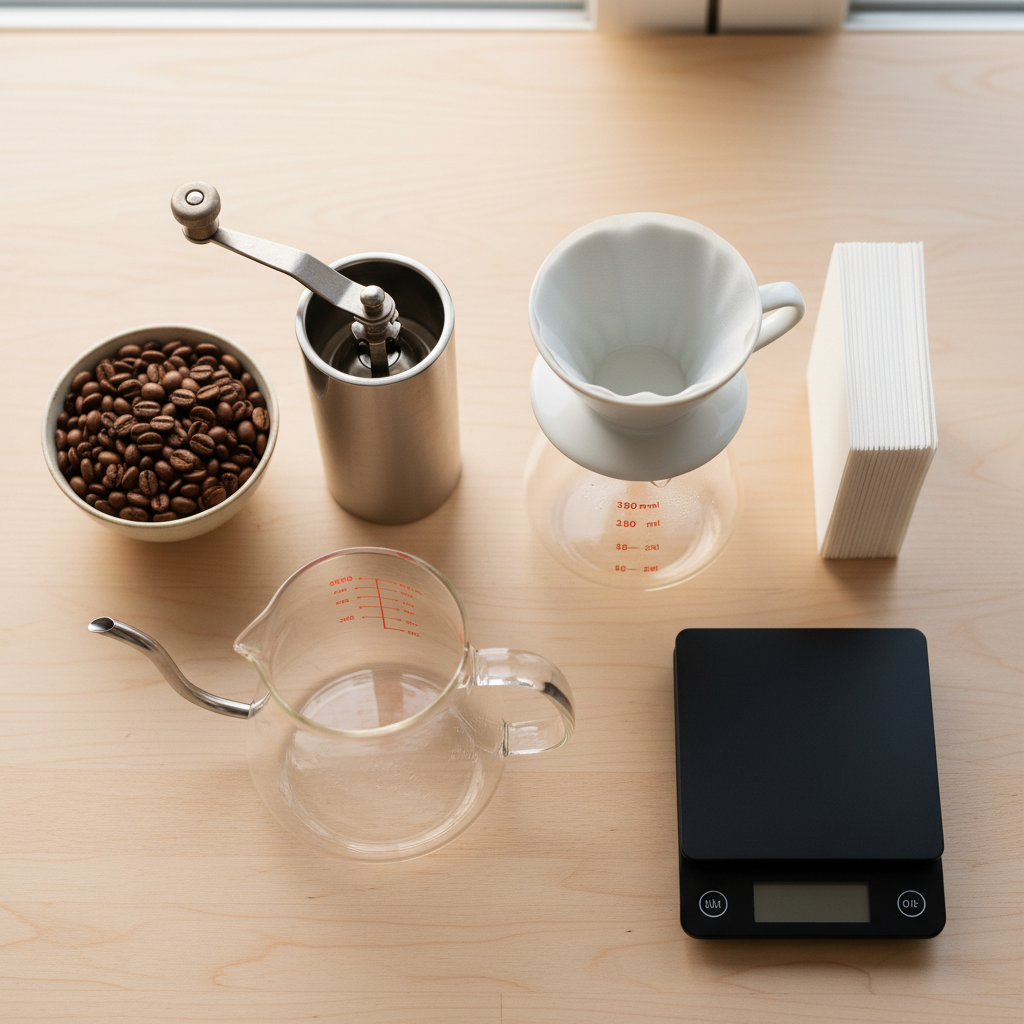
Essential: A kitchen scale ($15-25), a burr grinder (the Baratza Encore is the home barista standard, but a blade grinder works in a pinch), a kettle, and a brewing device.
Brewing Device Options:
1. Pour-Over (e.g., Hario V60): Offers clean, bright coffee and full control.
2. French Press: Makes a full-bodied, rich cup. Soak 4 minutes, then plunge.
3. AeroPress: Versatile and fast, can make a strong, espresso-like concentrate.
4. Drip Machine: Use a good one with a gold-tone or permanent filter. Pre-wet the filter with hot water to remove paper taste.
No Espresso Machine Path: For drinks calling for espresso, use a Moka pot (stovetop espresso) or an AeroPress with a fine grind and a metal filter. Both create a strong, concentrated coffee that mimics espresso’s body.
Step-by-Step Technique Tips
First, boil your water and let it sit for 30 seconds off the boil to reach 195-205°F (90-96°C). Grind your beans to the correct size: for pour-over, aim for a consistency like coarse sand; for French press, like breadcrumbs. Place your brewer on the scale, add the filter and coffee, and tare (zero) it. Start your timer and pour just enough water (about 60g) to saturate all the grounds. Wait 30 seconds for the coffee to “bloom” (release gases). Then, pour the remaining water in slow, steady circles, aiming to finish pouring by the 1:30 mark. Your total brew time (including bloom) should be between 2:30 and 3:30 minutes for a pour-over. Finally, swirl the finished brew in the carafe to mix it.
What Goes Wrong (and How to Fix It)
1. Tastes sour or sharp: Your coffee is under-extracted. Fix: Use a finer grind, increase brew time, or use hotter water.
2. Tastes bitter or harsh: Your coffee is over-extracted. Fix: Use a coarser grind, decrease brew time, or use slightly cooler water.
3. Tastes weak or watery: Your ratio is off. Fix: Use more coffee or less water. Stick to the 1:15 ratio by weight.
4. Iced coffee tastes diluted: You poured hot coffee over ice, which melted instantly. Fix: Make coffee ice cubes, use the Japanese iced coffee method (brew directly onto ice), or chill your brewed coffee overnight.
5. Milk doesn’t foam for a latte: You’re using the wrong milk or technique. Fix: Use colder, whole milk (or barista-style oat milk). Submerge the frother whisk just below the surface to introduce air, don’t just plunge it to the bottom.
How Can I Make My Favorite Café Drinks?
Here’s a quick-reference table for turning your perfect cup of coffee into café classics.
| Drink | Coffee Base | Milk | Sweetness | Effort |
|---|---|---|---|---|
| Iced Latte | 2 shots espresso (or 120ml strong coffee) | 8 oz (240ml) cold milk | 1-2 tbsp syrup (optional) | Low |
| Café Au Lait | 6 oz (180ml) strong brewed coffee | 6 oz (180ml) steamed milk | None | Medium |
| Mocha | 2 shots espresso (or 120ml strong coffee) | 6 oz (180ml) steamed milk | 1-2 tbsp chocolate sauce | Medium |
| Vanilla Sweet Cream Cold Brew | 8 oz (240ml) cold brew concentrate | 2 oz (60ml) vanilla sweet cream* | In the cream | Low |
| Caramel Macchiato | 2 shots espresso | 8 oz (240ml) steamed milk, foam | 1 tbsp vanilla syrup, caramel drizzle | High |
*Sweet cream: Mix 1/2 cup (120ml) heavy cream, 1/4 cup (60ml) milk, and 2 tbsp (30ml) vanilla syrup.
Iced Latte
The summer staple. Fill a 16oz glass with ice, add 2 shots of espresso (or 120ml of very strong coffee), then pour in 8oz of cold milk. According to Coffee Recipes, skipping the daily café run saves the average drinker over $1,500 a year.
Café Au Lait
Equal parts strong brewed coffee and steamed milk. No foam needed. It’s simpler than a latte but just as comforting.
Mocha
Add 1-2 tablespoons of chocolate sauce (like Hershey’s or Ghirardelli) to your cup, add a shot of espresso to melt it, stir, then add steamed milk.
Vanilla Sweet Cream Cold Brew
Cold brew is less acidic and perfect for making ahead. Steep 1 cup (100g) coarse ground coffee in 4 cups (950ml) cold water for 12-24 hours, then strain. Serve over ice with the vanilla sweet cream floated on top.
Caramel Macchiato
Start with 1 tbsp vanilla syrup in the glass, add steamed milk and foam, then slowly pour 2 shots of espresso over the back of a spoon to create a layered effect. Top with caramel drizzle.
Blended Mocha Frappé
Blend 1 cup strong cold coffee, 2 tbsp chocolate syrup, 1/2 cup milk, 2 cups ice, and 2 tbsp sugar (optional) until smooth. Top with whipped cream.
How Do I Make It Lighter or Dairy-Free?
Lowering sugar is easy: reduce or skip the syrup. The coffee itself has no carbs. For dairy-free, my top pick is oat milk (like Oatly Barista Edition) because it steams and froths well. Almond and soy milk work but can separate in very hot coffee. Coconut milk adds its own flavor, which is great for tropical iced drinks.
Can I Make Coffee Ahead and Store It?
Yes. Brewed coffee can be stored in a sealed carafe in the refrigerator for up to a week, though flavor peaks in the first 3-4 days. Cold brew concentrate lasts up to two weeks. For hot coffee, never leave it on a warming plate for more than an hour, as it will turn bitter. Coffee Recipes’ testing found that iced coffee made with chilled, pre-brewed coffee and regular ice cubes showed no significant flavor loss compared to fresh for up to 48 hours when kept cold.
☕ Master Recipe: The Perfect Pour-Over Coffee
A balanced, clean cup of coffee using the foundational 1:15 ratio.
Ingredients
- 20 g (about 4 level tbsp) whole bean coffee, medium roast
- 300 g (300 ml) filtered water, heated to 200°F (93°C)
Instructions
- Heat water to 200°F (93°C). Let it sit for 30 seconds off the boil if you don’t have a thermometer.
- Grind the 20g of coffee beans to a medium-fine consistency, similar to coarse sand.
- Place a paper filter in your pour-over cone (like a Hario V60) and rinse it with hot water. Discard the rinse water.
- Add the ground coffee to the damp filter. Place your cone over a mug on a kitchen scale and tare (zero) the scale.
- Start a timer. Pour just enough water (about 60g) to saturate all the grounds. Let it bloom for 30 seconds.
- Slowly pour the remaining 240g of water in a steady, circular motion, aiming to finish pouring by 1 minute 30 seconds.
- Let the coffee finish dripping through. The total brew time should be between 2:30 and 3:30 minutes.
- Give the mug a gentle swirl to mix the coffee, then serve immediately.
Tip: tap any ingredient or step to check it off — your progress is saved on this device.
Frequently Asked Questions
What’s the best coffee-to-water ratio for a standard cup?
For a balanced 12oz cup, use a 1:15 ratio by weight: 20 grams of coffee to 300 grams (or ml) of water.
Can I make good coffee without a grinder?
Yes, but buy pre-ground coffee from a local roaster or café and use it within two weeks for the best flavor. A blade grinder is a worthwhile $20 upgrade.
Why does my homemade iced coffee taste watery?
You’re likely pouring hot coffee over ice, which melts instantly. Brew your coffee at double strength (a 1:7.5 ratio) and pour it directly over a full glass of ice, or use coffee ice cubes.
What’s the difference between cold brew and iced coffee?
Iced coffee is hot-brewed coffee that’s chilled. Cold brew is steeped in cold water for 12-24 hours, resulting in a smoother, less acidic drink. Cold brew is also typically a concentrate.
How do I steam milk at home without a machine?
Heat milk in a saucepan until steaming (150°F/65°C). Then, use a French press: pump the plunger up and down vigorously for 30 seconds to create foam. A handheld electric frother from Ikea also works great.
How long do coffee beans stay fresh?
Whole beans stay fresh for about 3-4 weeks after roasting if stored in an airtight container in a cool, dark place. Don’t freeze or refrigerate them, as moisture is the enemy.
Is an expensive espresso machine necessary?
Not at all. A Moka pot ($30) or an AeroPress ($40) can make a strong, espresso-like concentrate perfect for lattes and americanos. The key is using a fine grind and the right technique.
Leave a Reply