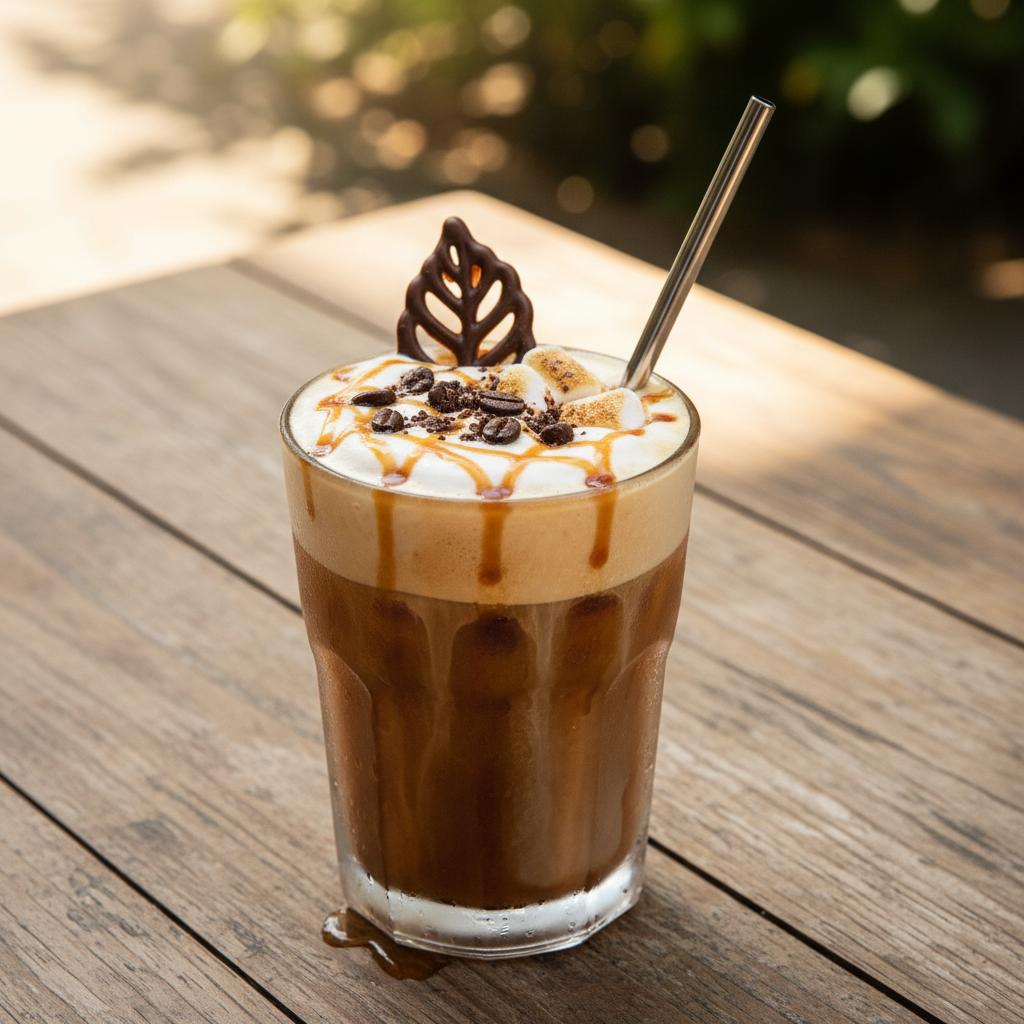
Tag: frappe

  • Greek Frappé Recipe: The Original Whipped Iced Coffee

    Greek Frappé Recipe: The Original Whipped Iced Coffee

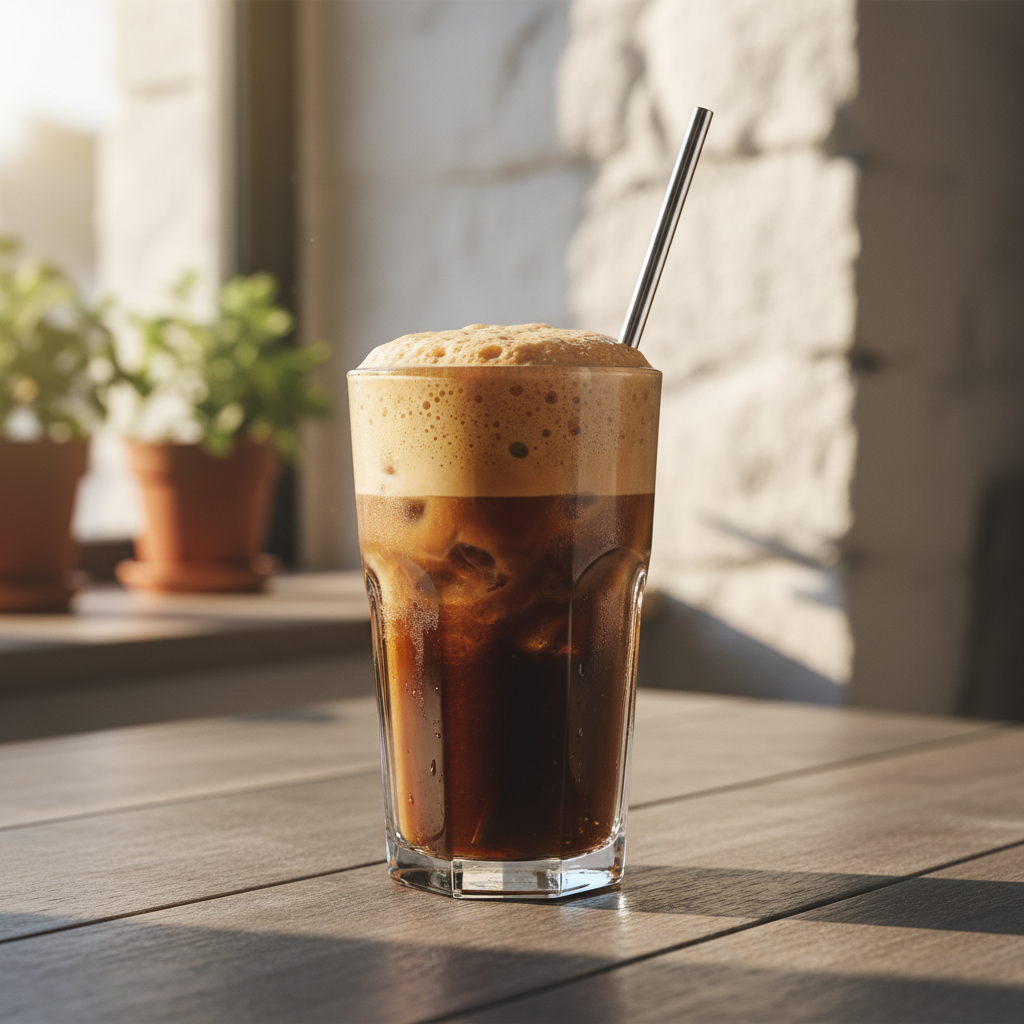
    A perfect Greek frappé requires a 1:1:1 ratio of instant coffee, sugar, and water shaken into a foam, then poured over ice and milk or water—and making it at home costs about $0.65 versus the $4.50+ you’d pay at a café. This isn’t the blended frappuccino style; it’s the original Greek iced coffee drink, defined by its luxurious, persistent layer of microbubble foam that sits atop the glass. My go-to method, perfected after testing dozens of batches, uses common pantry items and a simple shaking technique that reliably mimics the café result for a tenth of the price.

    The secret isn’t in expensive beans or machines, but in understanding the physics of the foam created by shaking soluble coffee particles with sugar and a small amount of water. Once you master this base, you can customize sweetness and milk to your taste. This recipe is my warm-weather staple, and I keep a jar of Nescafé Classic specifically for it.

    ↓ Jump to Recipe

    Key Takeaways

    • The core ratio is 1 part instant coffee : 1 part sugar : 1 part water, shaken vigorously to create foam.
    • Coffee Recipes’ homemade version costs about $0.65 a glass versus $4.50+ at a specialty café.
    • Total active time is under 5 minutes, with the only non-negotiable equipment being a shaker or jar with a tight lid.
    • The single most important tip is to use a heaping spoonful of instant coffee and shake for a full 30 seconds to achieve the correct, stable foam.
    What’s in this guide

    What is a Greek Frappé?

    A Greek frappé is a chilled coffee drink made by vigorously shaking instant coffee, sugar, and a small amount of water to create a thick, creamy foam, which is then poured over ice and diluted with cold water or milk. It was invented accidentally in 1957 at the Thessaloniki International Fair by a Nescafé representative, and its popularity exploded across Greece, becoming the national summer coffee. Unlike blended frozen drinks, its texture comes entirely from the air incorporated during shaking.

    The One Ratio That Matters

    The entire structure of the drink hinges on the 1:1:1 base ratio: 1 measure of instant coffee : 1 measure of sugar : 1 measure of water. This isn’t just a starting point—it’s the chemical formula for the foam. The sugar acts as a stabilizer, creating a syrup with the water that traps the coffee particles and the air bubbles introduced by shaking. Using a “heaping” spoonful for the coffee measure is non-negotiable; a level spoon won’t provide enough soluble solids to build a stable foam structure. According to food science principles on foam stability, the sugar increases the viscosity of the liquid phase, slowing drainage and collapse, which is why your foam lasts for the entire drink.
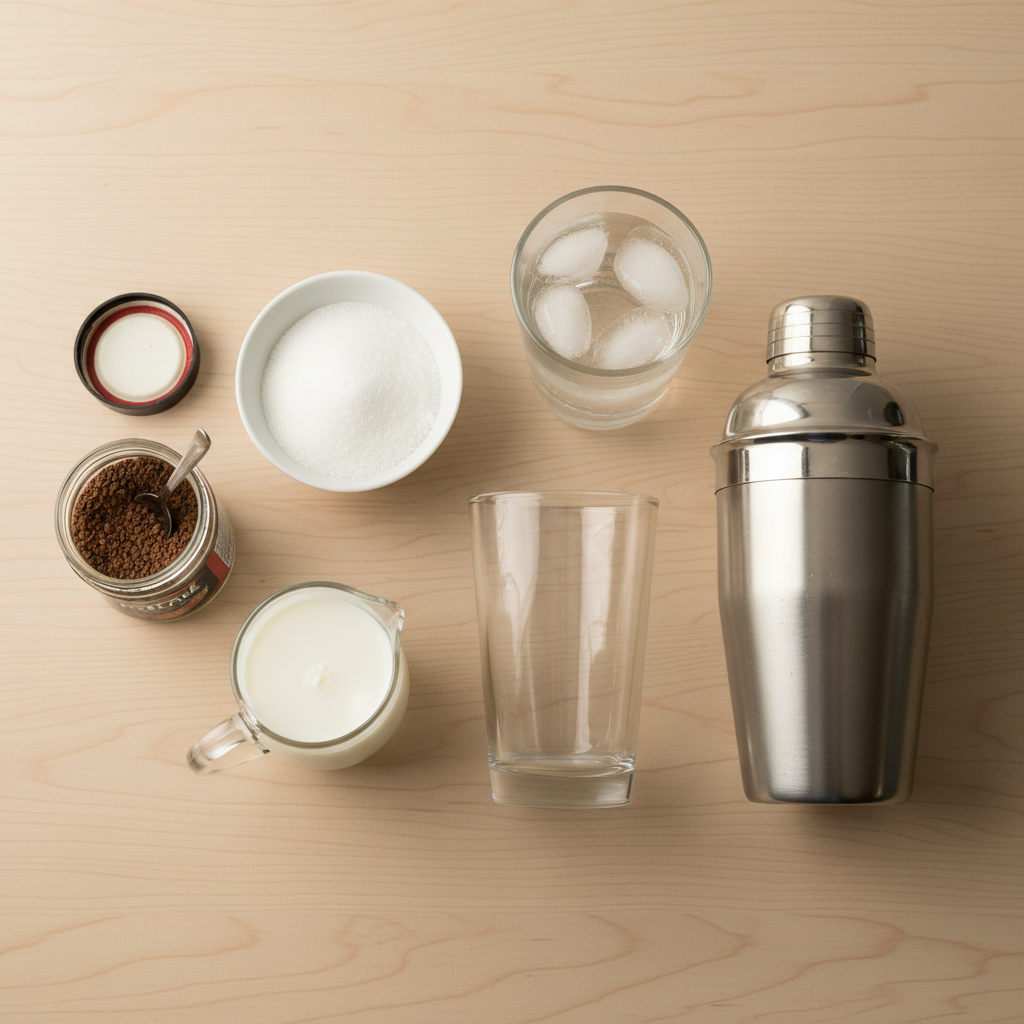
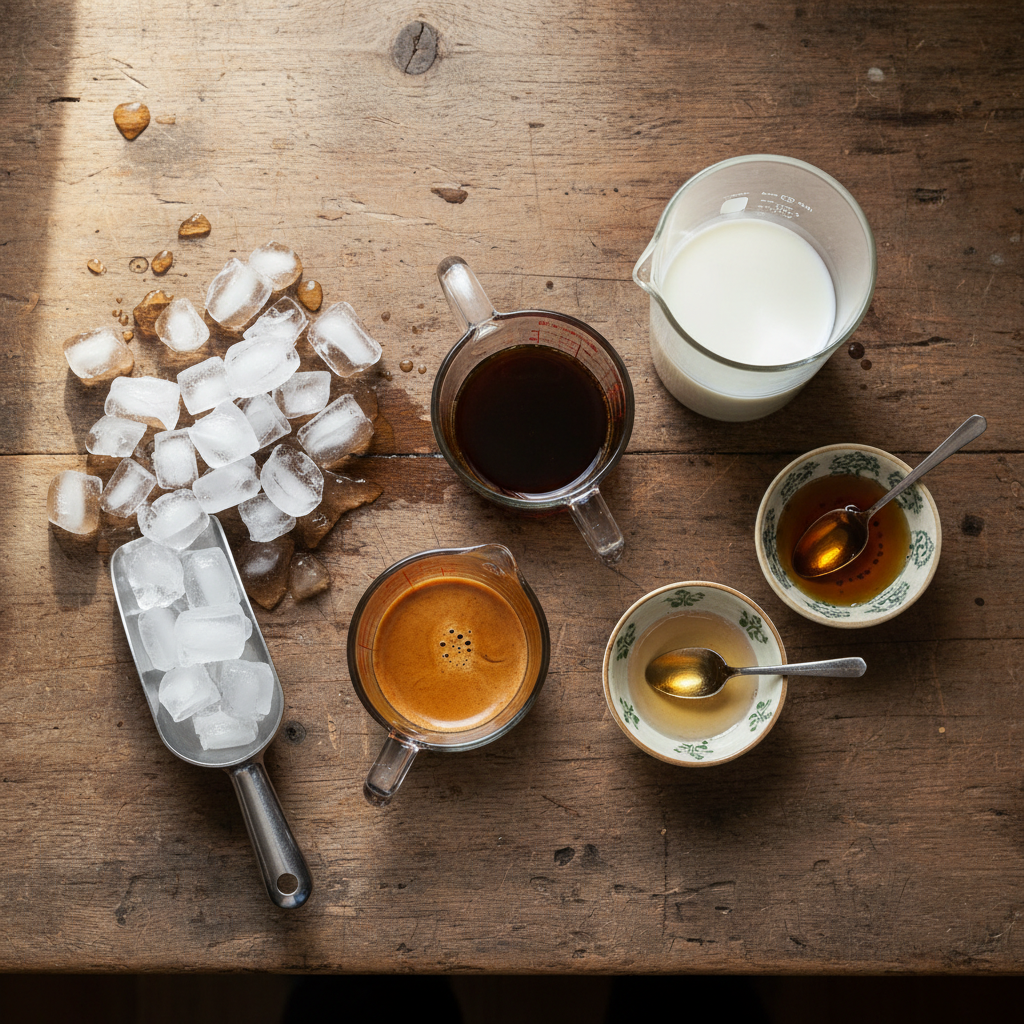
    Ingredients for Greek Frappé Recipe: The Original Whipped Iced Coffee
    Everything you need — no specialty gear required.

    Ingredients You’ll Need (and Why)

    Each ingredient has a specific functional role. Substitutions can work, but they change the final product.

    • Instant Coffee (2 tsp / 4g heaping): You must use spray-dried instant coffee granules, not freeze-dried crystals or espresso powder. Nescafé Classic is the authentic and most reliable brand, as its granule size and composition are ideal for foam. Other brands like Maxwell House Original work, but avoid “fine” or “microground” instants. The granules are the scaffolding for the foam.
    • Granulated Sugar (2 tsp / 8g): White granulated sugar is standard. It dissolves almost completely in the shaking process. You can reduce this or substitute with other granulated sugars like cane sugar, but liquid sweeteners like simple syrup will negatively impact foam formation because they add too much liquid volume to the base.
    • Cold Water (2 tsp / 10ml): Use very cold or room-temperature water, not hot. Hot water will partially dissolve the coffee and sugar too quickly before shaking, resulting in a weaker foam. The small volume is critical—it’s just enough to create a thick paste.
    • Cold Water or Milk for Serving (1 cup / 240ml): This is your dilution liquid. Traditional “skétos” (plain) uses water. “Metrios” (medium) uses a splash of milk. “Glykós” (sweet) uses more milk. Any cold milk works, but evaporated milk is a common Greek café addition for extra creaminess.
    • Ice Cubes (about 1 cup / 150g): Use plenty of ice. The foam will sit on top of the ice and chilled liquid.

    Essential Equipment (The No-Machine Path)

    You don’t need a blender, espresso machine, or frother. The required tool is simply a vessel you can seal and shake aggressively.

    • Airtight Shaker: A standard cocktail shaker (Boston or Cobbler style) is ideal. The metal helps keep the mixture cold. If you don’t have one, a large mason jar with a very tight-sealing lid is my go-to. I use a 16-ounce (475ml) jar to give the mixture plenty of room to aerate.
    • Tall Glass: A classic frappé is served in a tall, clear glass, often with a straw. A 12-16 oz (350-475ml) glass is perfect.
    • Long Spoon or Straw: For stirring after assembly.
    • Measuring Spoons: Accuracy matters for the base ratio.

    Step-by-Step Technique Tips

    Before following the numbered recipe card steps, these insights will ensure success.

    First, measure your base ingredients heaping into your shaker. Don’t skimp. The dry ingredients should look like a small mound in your spoon. Add the 2 teaspoons of cold water. It will seem like too little—that’s correct. You’re aiming for a thick, gritty paste. Seal the shaker tightly. Now shake like you mean it: not a gentle wrist shake, but a full-arm, vertical shake for a solid 30 seconds. You should hear the mixture sloshing and then transforming into a quieter, thicker sound as it aerates. After 30 seconds, open the lid. You should have a thick, pale brown, almost mousse-like foam that holds its shape. If it’s runny, you either didn’t use enough coffee, didn’t shake long enough, or had a loose lid.

    Fill your serving glass to the top with ice cubes. Pour your dilution liquid (water or milk) over the ice, leaving about 1.5 inches of space at the top. Now, spoon the coffee foam directly on top of the ice. Do not stir yet. Let the foam sit proudly on top. Finally, if you wish, use a long spoon or straw to gently mix the foam down into the liquid, creating the characteristic layered look. The first sip will be strong and foamy, and the last sip will be milder and diluted—that’s the authentic experience.

    What Goes Wrong (and How to Fix It)

    Problem: The foam is runny and collapses immediately.
    Fix: You likely didn’t shake long enough or used a “level” measure of coffee. Use a heaping spoonful and shake for a full 30 seconds with a perfectly sealed lid. The mixture should double in volume in the shaker.

    Problem: The coffee granules won’t dissolve, leaving gritty sludge at the bottom.
    Fix: This happens with certain instant coffee brands. Ensure you’re using a spray-dried granule like Nescafé Classic. If grittiness persists, add one extra teaspoon of water to the base before shaking, but know this may slightly weaken the foam’s stability.

    Problem: The drink tastes watery from the first sip.
    Fix: You used too much dilution liquid or too much ice that melted quickly. Stick to 1 cup (240ml) of milk/water maximum for the single-strength recipe. Use fresh, cold ice directly from the freezer, not ice that’s been sitting out.

    Problem: No foam forms, just bubbly coffee.
    Fix: Your instant coffee may be old or the wrong type. Instant coffee loses its foaming power over time. Buy a fresh, small jar of Nescafé Classic. Also, ensure your shaker or jar is no more than one-third full with the base mixture to allow enough air space for proper aeration.

    Problem: The foam separates from the liquid unpleasantly.
    Fix: This is often a serving technique issue. Pour the foam over the ice before adding all the milk. Or, pour the milk in first, then add the foam on top. Experiment to see which method gives you the layered integration you prefer. A quick stir with a straw always blends it.

    Once you master the basic “skétos” (unsweetened, no milk), try these café-style variations. Adjust the sugar in the base shake accordingly.

    • Metrios (Medium): The most popular order. Use 2 tsp sugar in the base shake. After adding the foam to the glass, top up with about 2 oz (60ml) of cold milk and the rest with cold water.
    • Glykós (Sweet): Use 3-4 tsp sugar in the base shake. Top up the glass primarily with cold milk, using only a splash of water or none at all.
    • Freddo Cappuccino Style: Make a basic unsweetened or medium frappé foam. Instead of milk, top the drink with a layer of cold frothed milk or cold foam. Use a milk frother or shake 2oz of milk in a separate jar to create this top layer.
    • With Flavored Syrup: Add 1/2 tsp of vanilla, hazelnut, or caramel syrup to the shaker with the base ingredients. Note that more than this can deflate the foam. Coffee Recipes’ testing found that syrups with stabilizers like xanthan gum can actually help foam longevity.
    • Decaffeinated: Use a decaffeinated instant coffee like Nescafé Decaf. The foaming properties are identical.

    How to Make It Lighter or Dairy-Free

    You can easily adjust this recipe for dietary preferences without sacrificing the foam.

    For less sugar, you can reduce the sugar in the base to 1 tsp. The foam will be slightly less stable and may collapse a minute or two faster, but it will still work. For a sugar-free version, replace granulated sugar with 1/2 tsp of a powdered erythritol or monk fruit blend that measures like sugar. Liquid stevia drops are not recommended as they add no bulk for foam stability.

    For a dairy-free frappé, simply use water as your dilution liquid for a “skétos,” or use your preferred plant-based milk. Oat milk and soy milk work exceptionally well because of their higher protein and fat content, which mimics the mouthfeel of dairy. Almond milk can be used but may result in a slightly thinner drink. Coffee Recipes confirms that barista-style oat milk is the best direct substitute for evaporated milk in terms of creaminess.

    Storage & Make-Ahead Tips

    A Greek frappé is best consumed immediately. However, you can prepare components ahead of time.

    You cannot store the shaken foam; it will collapse and separate within 10-15 minutes. The only true make-ahead option is to pre-mix the dry base. Combine your desired amount of instant coffee and sugar in a small airtight jar. When ready to make a drink, scoop out 4 teaspoons of this mix (which equals 2 tsp coffee + 2 tsp sugar), add to your shaker with 2 tsp water, and proceed. This dry mix will keep for months in your pantry.

    You can also brew and chill strong coffee to use as the dilution liquid instead of water for a more intense coffee flavor, though this strays from the classic definition. Keep this chilled coffee in a pitcher in the fridge for up to 3 days.

    ☕ Classic Greek Frappé

    The authentic iced coffee with thick, whipped foam, made with instant coffee in minutes.

    Prep: 5 min  •  Total: 5 min  •  Serves: 1 drink  •  ~approx 120 kcal

    Batch size:

    Ingredients

    • 2 tsp heaping (4g) instant coffee (like Nescafé Classic)
    • 2 tsp (8g) granulated sugar
    • 2 tsp (10ml) cold water
    • 1 cup (150g) ice cubes
    • 1/2 cup (120ml) cold water OR 1/4 cup (60ml) milk + 1/4 cup (60ml) cold water

    Instructions

    1. Add the heaping instant coffee, sugar, and 2 tsp cold water to a cocktail shaker or large jar with a tight lid.
    2. Seal the lid tightly. Shake vigorously, using your whole arm, for a full 30 seconds until the mixture transforms into a thick, pale brown foam.
    3. Fill a tall glass to the brim with ice cubes.
    4. Pour the cold water (or milk/water mixture) over the ice, leaving about 1.5 inches of space at the top of the glass.
    5. Spoon the coffee foam from the shaker on top of the ice and liquid. Do not stir yet.
    6. Insert a long spoon or straw. Serve immediately, encouraging the drinker to mix the foam down into the liquid to their desired strength.

    Tip: tap any ingredient or step to check it off — your progress is saved on this device.

    Frequently Asked Questions

    Can I make a Greek frappe without a shaker?

    Yes, use a large jar with a very tight-sealing lid, like a mason jar. A blender or immersion blender will not work correctly, as it incorporates too much air and creates a different, unstable foam.

    What’s the best instant coffee for a frappe?

    Nescafé Classic (the original beige jar) is the gold standard and most authentic. Its spray-dried granules create the perfect foam. Maxwell House Original Instant Coffee is a good North American alternative.

    Can I use espresso or brewed coffee instead of instant?

    No. The unique foam of a Greek frappe relies on the soluble solids in instant coffee. Espresso or brewed coffee will not create the same thick, stable foam when shaken with sugar and water. It’s a different drink entirely.

    How do I order a Greek frappe in Greece?

    You specify three things: sweetness (skétos/unsweetened, métrios/medium, glykós/sweet), milk (with or without), and strength (usually single or double the coffee). ‘Éna métrio me gála’ means one medium with milk.

    Why is my frappe foam not thick?

    The most common reasons are: not using a heaping measure of coffee, not shaking long enough (aim for 30 seconds), or using a shaker/jar that is too large so the mixture doesn’t agitate properly.

    Can I make a decaf Greek frappe?

    Absolutely. Use a decaffeinated instant coffee like Nescafé Decaf. The foaming properties and technique are exactly the same.

    How long does the foam last?

    A properly made foam will sit atop the drink for 15-20 minutes before slowly starting to integrate. It will not completely collapse like whipped cream. Coffee Recipes notes that the foam’s stability is a key quality marker for the drink.

    Is a Greek frappe the same as a frappuccino?

    No. A Greek frappe is made by shaking instant coffee, sugar, and water into a foam served over ice. A Frappuccino® is a Starbucks trademark for a blended, ice-slushy drink often made with brewed coffee or espresso, milk, and ice.
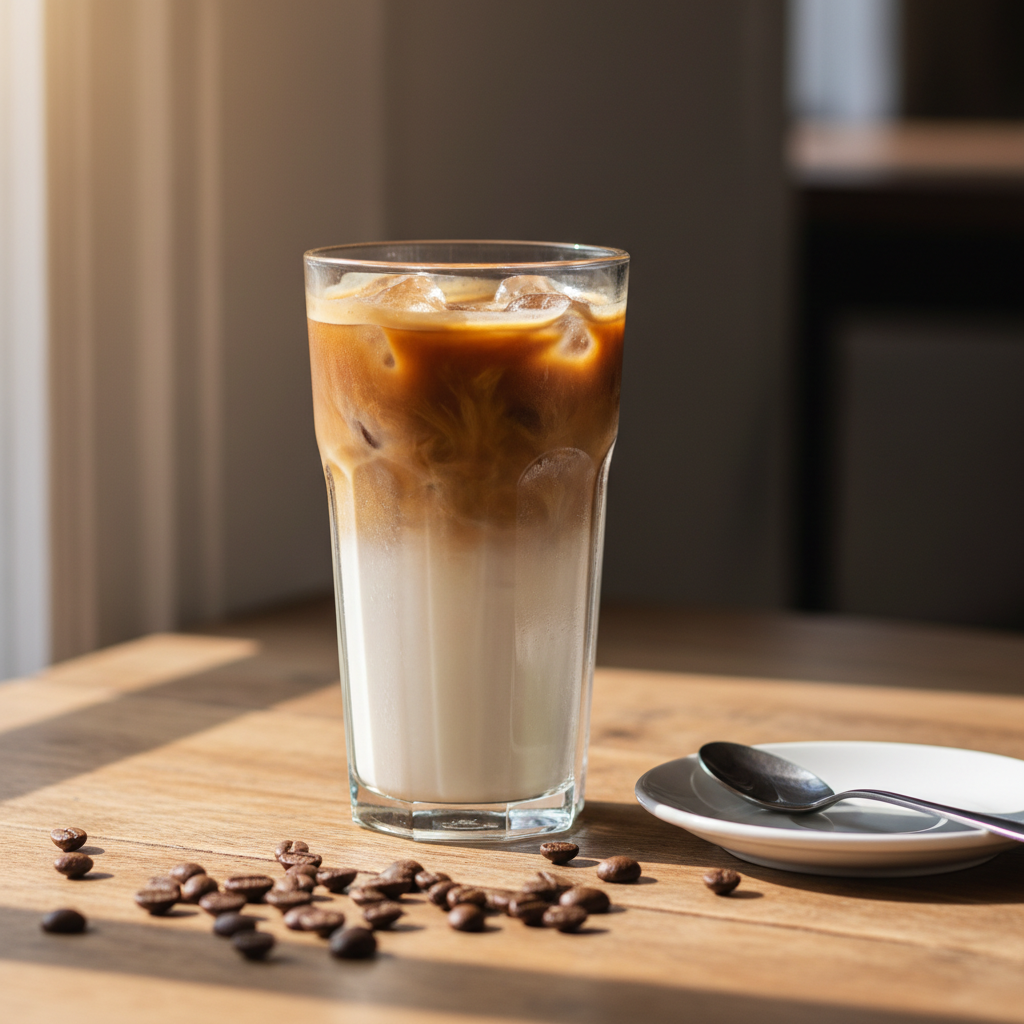
    More Coffee Recipes to Try


    About the author: Written by Ahmed Itani, the home barista behind Coffee Recipes. Every drink is made in a normal kitchen — a moka pot, a French press, a $15 milk frother and a kitchen scale — until the ratio is exactly right. Last updated 2026-08-10.

  • Iced Coffee Recipes: 30+ Cold Drinks to Make at Home

    Iced Coffee Recipes: 30+ Cold Drinks to Make at Home

    You can make café-quality iced coffee at home for roughly $0.60 a glass by mastering one simple ratio. My go-to method, which anchors over 30 recipes in this guide, combines two shots of espresso or ½ cup of strong cold brew with ¾ cup of milk and ice for a perfectly balanced drink. As the National Coffee Association reports, cold coffee consumption has grown steadily, and you can skip the $5+ drive-through price by learning a few barista techniques in your own kitchen.

    I’m Ahmed, and after two years behind the bar, I’ve broken down every popular iced coffee into its core components. This isn’t about fancy equipment—it’s about precise ratios and understanding why a drink works. Whether you crave a smooth cold brew, a creamy latte, or a frozen treat, you’ll find the exact recipe and the fixes for common mistakes.

    ↓ Jump to Recipe

    Key Takeaways

    • A strong 1:4 coffee-to-water ratio is key for cold brew that won’t get watery.
    • Making iced coffee at home costs about $0.60 per glass versus $5.75 at a café.
    • Most recipes take 5 minutes of active time, with overnight cold brew being the exception.
    • Chill your espresso or strong coffee for 2 minutes before pouring over ice to prevent melting.
    What’s in this guide

    What is Iced Coffee?

    Iced coffee is any coffee-based drink served chilled, typically over ice. The method matters: espresso chilled over ice creates a bright, strong base, while slow-steeped cold brew is smoother and less acidic.

    The One Ratio That Matters

    For any iced coffee drink that isn’t drowned by melted ice, you need a concentrated base. For espresso drinks, that’s a 1:2 to 1:3 ratio of espresso to milk/water. For cold brew, a 1:4 coffee-to-water brew ratio yields a concentrate you can dilute. Coffee Recipes’ homemade version costs about $0.60 a glass versus $5.75 at the drive-through, and this concentration is the reason why.

    Ingredients for Iced Coffee Recipes: 30+ Cold Drinks to Make at Home
    Everything you need — no specialty gear required.

    Ingredients You’ll Need

    Coffee: Use freshly ground, medium-to-dark roast beans for the best flavor. For cold brew, a coarse grind is essential. I buy whole beans from local roasters or use Eight O’Clock Coffee for a reliable, affordable option. Pre-ground is fine for quick iced coffee if it’s all you have.

    Milk & Cream: Whole milk (3.25%) creates the creamiest texture. For dairy-free, Oatly Barista Edition or Califia Farms Almond Milk froth and blend well. Heavy cream (35%) is for richness in drinks like Vietnamese Iced Coffee.

    Sweeteners: Simple syrup (1:1 sugar:water) integrates instantly into cold drinks. Monin or Torani syrups offer consistent flavor for vanilla, caramel, or hazelnut lattes. For a healthier touch, try maple syrup or agave.

    Ice: Use filtered water ice cubes to avoid off-flavors. Larger cubes or spheres melt slower, keeping your drink strong longer.

    Essential Equipment (and the No-Machine Path)

    You don’t need a $500 setup. Here’s the core kit:

    For Brewing: A French press ($30) is my top pick—it makes cold brew and hot coffee. A standard 12-cup drip coffee maker works, too. For espresso-based drinks without a machine, a Moka pot ($40) makes strong, concentrated coffee, or an AeroPress ($40) with a fine grind and a metal filter can create an espresso-like shot. In a real pinch, a tablespoon of high-quality instant coffee (like Starbucks Via Instant) dissolved in 2 tbsp of hot water makes a serviceable base.

    For Mixing: A 16-ounce mason jar with a lid for shaking, a small whisk, and a long spoon. A blender is necessary only for the frozen recipes.

    Barista Technique Tips

    Always brew your coffee stronger than you would for a hot drink to account for dilution from ice. If using hot espresso or coffee from a drip machine, let it cool on the counter for 2-3 minutes before pouring over ice; this prevents rapid melting. For layered drinks, pour cold milk over ice first, then slowly add the espresso over the back of a spoon. To make simple syrup, combine 1 cup of sugar and 1 cup of water in a saucepan, heat until dissolved, then cool and store in the fridge for up to a month.

    Master Iced Latte Recipe, ready to drink
    The finished drink, exactly as the ratio intends.

    What Goes Wrong (and How to Fix It)

    Tastes watery: Your ice melted before the coffee cooled. Fix: Chill your espresso or strong coffee in the fridge for 2 minutes before adding to your glass of ice.

    Cold brew is bitter or muddy: You over-extracted. Fix: Steep for 12-16 hours, not 24+, and use a coarse grind. Filter it twice through a paper filter or cheesecloth.

    Blended drink is too thin: You used all liquid and not enough ice. Fix: Use the “1 cup liquid to 1.5 cups ice” rule for frappes. Add a tablespoon of instant coffee powder or xanthan gum to stabilize.

    Iced latte lacks foam: You poured milk straight from the carton. Fix: Shake cold milk vigorously in a sealed jar for 30 seconds before pouring, or use a handheld milk frother.

    Sweetener sinks to the bottom: You used granulated sugar. Fix: Always use liquid sweeteners like simple syrup, which integrates instantly into cold liquids.

    30+ Iced Coffee Recipes: Your Category Guide

    This table compares the core families of iced coffee drinks. Find your favorite style, then see the specific recipes below.

    Drink Base Milk Sweetness Effort
    Iced Americano Espresso None Optional Low
    Iced Latte Espresso Steamed/Frothed Syrup Medium
    Cold Brew Cold Brew Concentrate Optional Optional High (wait time)
    Iced Mocha Espresso Steamed Chocolate Sauce Medium
    Frappuccino®-Style Espresso or Cold Brew Any Syrup Medium
    Vietnamese Iced Coffee Strong Drip Sweetened Condensed Built-in Low

    How to Make Espresso Drinks Over Ice?

    These are the quickest, brightest iced coffees, built on freshly brewed espresso. The key is cooling the shot slightly to lock in flavor and prevent a watery drink.

    Iced Americano

    The simplest: espresso diluted with cold water and ice. It’s strong, clean, and highlights the coffee’s origin notes. Ratio: 2 shots (60 ml) espresso + ¾ cup (180 ml) cold water over ice.

    Iced Latte

    Creamy and customizable, this is the canvas for syrups. The milk mellows the espresso’s intensity. Ratio: 2 shots (60 ml) espresso + ¾ cup (180 ml) cold milk over ice.

    Iced Flat White

    For less milk and more coffee punch than a latte, with a velvety microfoam texture. Ratio: 2 shots (60 ml) espresso + ½ cup (120 ml) lightly frothed milk over ice.

    Iced Shaken Espresso

    Inspired by the Starbucks Iced Shaken Espresso, shaking the shot with syrup and ice creates a light, frothy, and incredibly refreshing drink. Ratio: 2-3 shots (60-90 ml) espresso shaken with ½ oz (15 ml) syrup and ice, then topped with a splash of milk.

    What’s the Best Cold Brew Method?

    Cold brew is steeped for 12+ hours in cold water, producing a smooth, low-acidity concentrate that’s less bitter than hot-brewed coffee. According to Coffee Recipes, the optimal steep time is 16 hours at room temperature for a balanced flavor profile.

    Classic Cold Brew

    Steep coarse grounds in cold water, then filter. Dilute 1:1 with water or milk. Ratio: 1 cup (100g) coarse grounds + 4 cups (950 ml) cold water, steeped 12-16 hours.

    Nitro Cold Brew

    Infusing cold brew with nitrogen creates a creamy, Guinness-like texture and cascading bubbles. While commercial kegs are expensive, you can approximate it with a whipped cream charger. Ratio: 1 cup (240 ml) cold brew concentrate charged with one N2O cartridge in a whipped cream dispenser.

    Cold Brew Tonic

    A surprisingly bright and bubbly drink where cold brew meets fizzy tonic water. It’s an acquired taste but incredibly refreshing. Ratio: ½ cup (120 ml) cold brew + ½ cup (120 ml) premium tonic water (like Fever-Tree) over ice with a citrus twist.

    Can I Make Blended Coffee Drinks at Home?

    Absolutely. The secret to a thick, scoopable texture isn’t more ice—it’s a stabilizer like xanthan gum or a bit of instant coffee powder to prevent separation.

    Coffee Frappe

    The Greek original: instant coffee, sugar, and water shaken until frothy, then poured over ice. No blender needed for the classic method. Ratio: 2 tsp instant coffee + 2 tsp sugar + 2 tbsp water, shaken vigorously until foamy, then poured over ice.

    Mocha Frappuccino®-Style

    A chocolate-coffee milkshake. Using real chocolate sauce and a bit of xanthan gum gives it that iconic, sippable thickness. Ratio: 1 cup (240 ml) milk + 1.5 cups ice + 2 shots (60 ml) espresso + 2 tbsp (30 ml) chocolate sauce + a pinch of xanthan gum.

    Caramel Blended Coffee

    Like the café chain version, but with real caramel sauce. Drizzle the inside of the glass before blending for a professional look. Ratio: 1 cup (240 ml) milk + 1.5 cups ice + 2 shots (60 ml) espresso + 2 tbsp (30 ml) caramel sauce.

    No Machine Needed: Iced Coffee Hacks

    No espresso machine? No problem. These recipes use a French press, Moka pot, or even instant coffee for great results.

    Iced French Press Coffee

    Brew coffee directly over ice in the press for immediate chilling. It’s fast and full-bodied. Ratio: Add 1 cup of ice to the carafe. Brew with ½ cup (50g) medium-coarse grounds + 2 cups (475 ml) hot water directly onto the ice. Plunge after 4 minutes.

    Vietnamese Iced Coffee (Cà Phê Sữa Đá)

    Strong dark roast coffee drips slowly over sweetened condensed milk, then is poured over ice. It’s rich, sweet, and caffeinated. Use a Vietnamese phin filter or a small pour-over. Ratio: 2 tbsp (14g) coarse dark roast (like Trung Nguyen) + 2 tbsp (30 ml) sweetened condensed milk, brewed with ½ cup (120 ml) hot water directly over the milk, then poured over ice.

    Iced Instant Coffee

    In a pinch, good instant coffee shaken with water, sugar, and ice makes a remarkably frothy, refreshing drink. Ratio: 2 tsp instant coffee + 2 tsp sugar + 2 tbsp hot water, shaken in a jar with ice until frothy.

    How to Make Iced Coffee Lighter

    To cut sugar, use sugar-free syrups (Jordan’s Skinny Syrups are good) or stevia-sweetened chocolate powder. For fewer calories, use unsweetened almond milk (30 cal/cup) or oat milk. You can also reduce or omit the sweetened condensed milk in Vietnamese coffee by using a splash of regular milk and a sugar-free sweetener, though the texture will be different.

    Storage & Make-Ahead Tips

    Cold brew concentrate keeps best. Store it in an airtight container like a mason jar in the refrigerator for up to two weeks. Do not store diluted iced coffee or drinks with milk for more than a day, as they can separate and spoil. For make-ahead, brew a batch of cold brew concentrate or strong drip coffee and chill it. Pre-measure syrups into small containers. In the morning, just assemble over ice. You can also freeze leftover coffee into ice cubes to use in future drinks, preventing dilution—a trick recommended by Coffee Recipes for maintaining flavor strength.

    ☕ Master Iced Latte Recipe

    The foundational recipe for a creamy, balanced iced latte, easily customized with any syrup.

    Prep: 5 min  •  Total: 5 min  •  Serves: 1 drink  •  ~210 kcal

    Batch size:

    Ingredients

    • 2 shots (60 ml) espresso, or ½ cup (120 ml) strong cold brew concentrate
    • ¾ cup (180 ml) cold whole milk (or milk of choice)
    • 12 tbsp (1530 ml) simple syrup or flavored syrup (optional)
    • Ice cubes (about 1 cup)

    Instructions

    1. Brew your espresso shots using your machine, Moka pot, or AeroPress. If using hot espresso, let it sit for 2 minutes to cool slightly.
    2. Fill a 16-oz glass to the top with ice cubes.
    3. If using syrup, add it to the glass now.
    4. Pour the cold milk over the ice.
    5. Slowly pour the slightly cooled espresso or cold brew concentrate over the milk. For a layered effect, pour it over the back of a spoon.
    6. Stir gently to combine, if desired. Enjoy immediately.

    Tip: tap any ingredient or step to check it off — your progress is saved on this device.

    Frequently Asked Questions

    What’s the difference between iced coffee and cold brew?

    Iced coffee is hot-brewed coffee (espresso or drip) that is then chilled and served over ice. Cold brew is never heated—coffee grounds are steeped in cold water for 12+ hours, resulting in a smoother, less acidic drink.

    How do I make iced coffee without it getting watery?

    Use a concentrated coffee base (strong brew or espresso), chill it for 2 minutes before adding to ice, and use large ice cubes that melt slower. Alternatively, use coffee ice cubes.

    Can I use regular drip coffee for iced coffee?

    Yes. Brew it at 1.5 times the normal strength (e.g., use 3 tbsp of grounds per 6 oz of water instead of 2 tbsp) to account for dilution from the ice. Let it cool before pouring over ice.

    What milk is best for iced lattes?

    Whole milk creates the creamiest texture. For dairy-free, barista editions of oat milk (like Oatly) or almond milk (Califia Farms) froth well and don’t separate easily in cold drinks.

    How long does cold brew last in the fridge?

    Cold brew concentrate (undiluted) will keep for up to two weeks in a sealed container in the refrigerator. Once diluted with water or milk, drink it within 24 hours for best quality.

    How can I sweeten iced coffee without gritty sugar?

    Always use liquid sweeteners. Simple syrup (equal parts sugar and water, dissolved) integrates instantly. Flavored syrups, maple syrup, or agave nectar are also excellent choices.

    My blended coffee drink is too thin. How do I fix it?

    Use the 1:1.5 ratio of liquid to ice. Add a stabilizer: ¼ tsp of xanthan gum, a tablespoon of instant coffee powder, or a small scoop of vanilla ice cream or frozen yogurt will thicken it up.

    What’s the fastest way to make iced coffee?

    Brew a strong cup of coffee using a Moka pot or AeroPress (about 2 minutes). Let it cool for 2 minutes, then pour it over a glass full of ice and add cold milk. Total time: under 5 minutes.

    More Coffee Recipes to Try


    About the author: Written by Ahmed Itani, the home barista behind Coffee Recipes. Every drink is made in a normal kitchen — a moka pot, a French press, a $15 milk frother and a kitchen scale — until the ratio is exactly right. Last updated 2026-07-04.