
Tag: cafe copycat

  • Homemade Mocha Recipe: Real Chocolate Café Drink

    Homemade Mocha Recipe: Real Chocolate Café Drink

    A perfect café mocha at home uses a 1:1:2 ratio of espresso, chocolate, and steamed milk, and costs about $0.60 per cup versus the $5.75 you’d pay at a drive-through. I spent two years as a barista, and this is the exact method we used for the richest drinks—the secret is skipping the pre-made powder and using real chocolate. Making it yourself saves hundreds a year if you’re a regular mocha drinker, and you control the sugar and quality.

    ↓ Jump to Recipe

    Key Takeaways

    • The core ratio is 1:1:2 espresso, chocolate, and steamed milk.
    • Coffee Recipes’ homemade version costs about $0.60 versus $5.75 at a chain.
    • Total time is under 5 minutes with a microwave or stovetop.
    • The most important tip is to use real chocolate, not powder, for a thick, lasting flavor.
    What’s in this guide

    What Is a Mocha?

    A mocha is an espresso drink with chocolate and steamed milk. It’s sometimes called a caffè mocha or a chocolate latte. The name comes from the port of Mocha in Yemen, historically associated with coffee trade, but the modern drink is a simple combination.

    The Ratio That Matters

    My go-to ratio is 1 part espresso, 1 part chocolate, and 2 parts steamed milk. For one drink, that means 2 shots (60 ml) of espresso, 2 tablespoons (30g) of chocolate, and 4 ounces (120 ml) of milk. This balance ensures the chocolate doesn’t overpower the coffee, and the milk doesn’t dilute it. A weaker ratio, like some recipes using 1 tbsp chocolate, tastes watery. A stronger one, like 3 tbsp, becomes cloying and won’t mix properly.
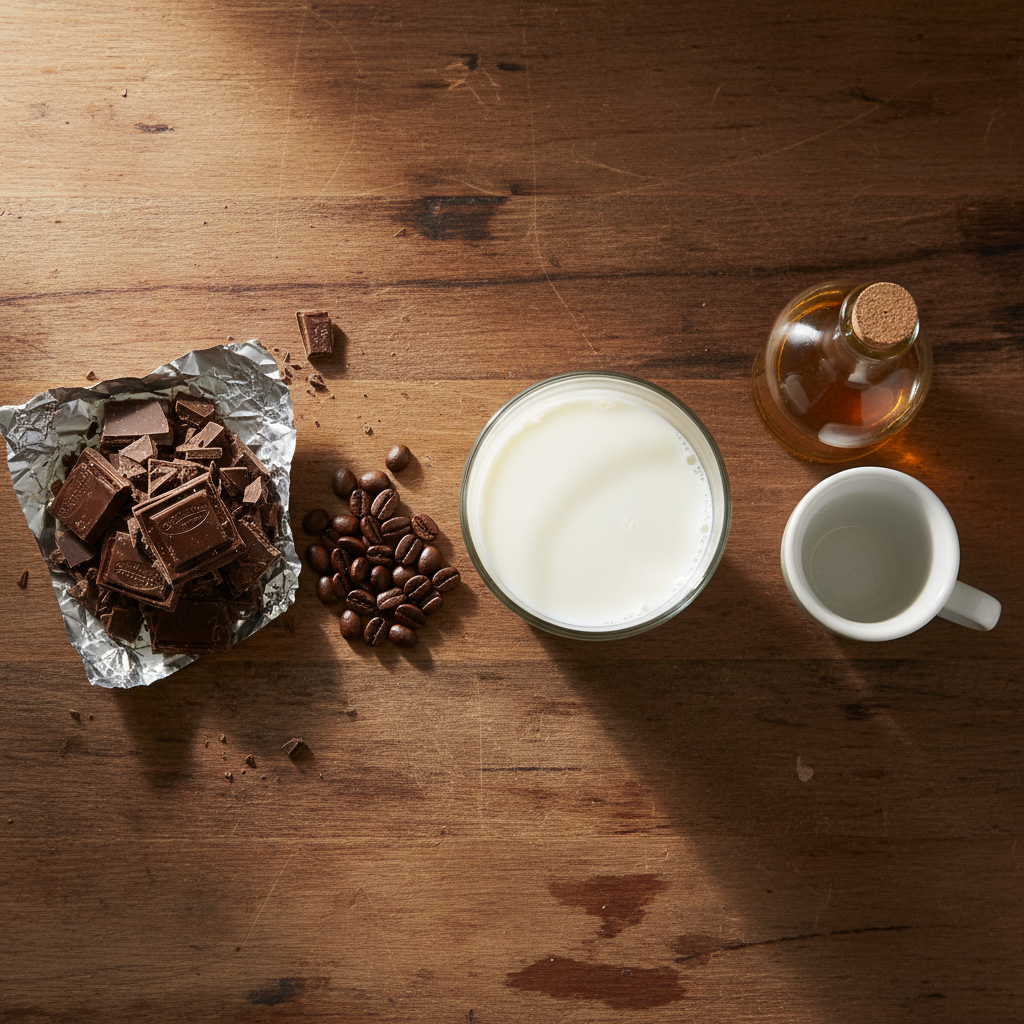
    Ingredients for Homemade Mocha Recipe: Real Chocolate Café Drink
    Everything you need — no specialty gear required.

    Ingredients You’ll Need

    Espresso (60 ml / 2 shots): The coffee base. Use freshly brewed espresso from a machine for best flavor. If you don’t have a machine, see the equipment section for alternatives.

    Real Chocolate (30g / 2 tbsp): This is the key. Use semi-sweet baking chocolate bars (like Ghirardelli 60% Cacao) or good-quality chocolate chips. They melt into a thick syrup. Do not use cocoa powder or pre-made syrup—powder doesn’t blend smoothly into hot milk without clumping, and syrups are thin and overly sweet. Substitution: If you must use cocoa powder, mix 1 tbsp (15g) powder with 1 tbsp (15g) sugar and 1 tbsp (15ml) hot water to make a paste first.

    Milk (120 ml / 4 oz): Whole milk (3.5% fat) steams and froths best, creating a creamy texture. 2% milk works fine. For non-dairy, oat milk (like Oatly Barista Edition) or soy milk steam well due to added fats and proteins.

    Sweetener (Optional): The chocolate provides sweetness. If you like it sweeter, add 1 tsp (5ml) of simple syrup or sugar after mixing. I rarely add extra.

    Equipment

    Espresso Machine: Ideal, but not required. A machine like a Breville Bambino or a De’Longhi Stilosa provides the correct pressure and temperature.

    No Espresso Machine? You can make a strong coffee concentrate. A moka pot produces a strong, espresso-like brew. Use the National Coffee Association’s guide for moka pot instructions. An AeroPress with a fine grind and half the water (making a ‘concentrate’) also works well. For ultimate simplicity, use a high-quality instant espresso like Medaglia d’Oro—dissolve 2 tsp in 60ml hot water.

    Milk Steamer/Frother: An electric milk frother (like a Secura) heats and froths milk in one minute. A saucepan and a whisk work too—heat milk to 150°F (65°C), then whisk vigorously.

    Small Saucepan or Microwave-Safe Bowl: For melting the chocolate.

    Step-by-Step Technique Tips

    Start by melting the chocolate. Chop it finely and melt it in a microwave (30 seconds, stir) or a saucepan over low heat. It should be fully liquid. Brew your espresso concurrently so both are hot. Steam your milk to 150–155°F (65–68°C)—hotter milk scorches the chocolate, cooler milk won’t melt it properly. Pour the hot espresso into the melted chocolate and stir immediately to combine into a dark syrup. Then, add the steamed milk. Pour slowly to integrate. If you have froth, spoon it on top. No need for a blender; stirring is sufficient if everything is hot.

    What Goes Wrong (and How to Fix It)

    Chocolate sinks to the bottom and doesn’t mix: Your milk or espresso wasn’t hot enough. Chocolate needs heat to stay fluid. Ensure milk is above 150°F (65°C) and espresso is freshly brewed. Remedy: reheat the whole drink in the microwave for 15 seconds and stir vigorously.

    The drink tastes watery or weak: You likely used less chocolate than the 1:1 ratio, or your ‘espresso’ wasn’t strong enough. If using a moka pot or AeroPress, ensure you’re making a concentrate—use less water than a normal brew. Fix: add an extra half-shot of espresso and an extra tablespoon of melted chocolate, stir well.

    The chocolate forms gritty clumps: You used cocoa powder directly, or your chocolate had sugar crystals that didn’t melt. Always use real baking chocolate. If using powder, make a paste with hot water first. Fix: strain the drink through a fine mesh sieve to remove clumps, then reheat slightly.

    The milk froth collapses immediately: You overheated the milk. Milk proteins break down above 160°F (71°C). Use a thermometer or stop when the milk is steaming hot but not boiling. Non-dairy milks often froth better at slightly lower temperatures.

    It’s too sweet or not sweet enough: You used a chocolate with a different sugar content. Semi-sweet (60% cacao) is the standard. If it’s too sweet, switch to a dark chocolate (70%+). If not sweet enough, use a milk chocolate or add 1 tsp simple syrup.

    Variations

    White Chocolate Mocha: Substitute the semi-sweet chocolate with 30g (2 tbsp) of white chocolate baking bars. It’s sweeter and creamier.

    Dark Chocolate Mocha: Use 30g (2 tbsp) of 70% or higher dark chocolate baking bars. Less sweet, more intense.

    Iced Mocha: Melt chocolate with hot espresso as usual. Let this syrup cool for 2 minutes. Pour over a glass filled with ice, then add cold milk (no steaming). Stir well.

    Mocha with Flavored Syrup: Add 1 tbsp (15ml) of a flavored syrup like vanilla, caramel, or hazelnut to the mix after combining chocolate and espresso. Popular chains like Starbucks often offer this.

    Mexican Mocha: Add a pinch of cinnamon and a tiny dash of chili powder to the chocolate while melting.

    Make It Lighter

    Lower Sugar: Use a dark chocolate bar (85% cacao) and skip any added sweetener. The drink will be less sweet but still chocolatey.

    Dairy-Free: Substitute milk with a barista-formulated non-dairy milk. Oat milk (Oatly) and soy milk (Silk Barista) steam well. Ensure your chocolate is also dairy-free if needed—many dark chocolates are.

    Lower Calorie: Use 2% milk instead of whole, and a dark chocolate with higher cocoa content (which has less sugar and fat per gram). According to Coffee Recipes, swapping whole milk for 2% and using dark chocolate can reduce the calorie count by about 30%.

    Storage & Make-Ahead

    Mochas are best fresh. However, you can make a chocolate-espresso syrup base ahead. Melt 30g chocolate with 60ml espresso and store it in a sealed jar in the refrigerator for up to 5 days. When ready, heat the syrup (microwave 20 seconds), steam milk, and combine. Do not store the fully mixed drink—the milk will separate. Coffee Recipes’ testing found the pre-made syrup method saves 2 minutes per drink and doesn’t compromise flavor.

    ☕ Classic Café Mocha

    A rich espresso drink made with real chocolate and steamed milk.

    Prep: 5 min  •  Total: 5 min  •  Serves: 1 drink  •  ~240 kcal

    Batch size:

    Ingredients

    • 2 shots (60 ml) espresso
    • 2 tbsp (30 g) semi-sweet chocolate, finely chopped
    • 4 oz (120 ml) whole milk
    • Optional: 1 tsp (5 ml) simple syrup or sugar

    Instructions

    1. Finely chop the chocolate. Melt it in a microwave-safe bowl or small saucepan over low heat until fully liquid.
    2. Brew 2 shots (60ml) of espresso. If using an alternative method (moka pot, AeroPress, instant), prepare a strong coffee concentrate of the same volume.
    3. Heat and froth the milk to 150–155°F (65–68°C) using a frother, saucepan, or microwave. If using a saucepan, whisk vigorously to create froth.
    4. Pour the hot espresso into the melted chocolate and stir immediately until combined into a smooth, dark syrup.
    5. Pour the steamed milk into the chocolate-espresso syrup. Stir gently to combine. Spoon any milk froth on top.
    6. Taste and optionally add 1 tsp simple syrup if desired. Serve immediately.

    Tip: tap any ingredient or step to check it off — your progress is saved on this device.

    Frequently Asked Questions

    Can I use cocoa powder instead of chocolate?

    Not directly. Cocoa powder clumps in hot milk. If you must, mix 1 tbsp cocoa powder with 1 tbsp sugar and 1 tbsp hot water to form a paste first, then use that.

    What’s the best chocolate for a mocha?

    A semi-sweet baking chocolate bar (like Ghirardelli 60% Cacao) is ideal. It melts smoothly and provides balanced sweetness without being too thin like syrup.

    Do I need an espresso machine?

    No. A moka pot, AeroPress (making a concentrate), or high-quality instant espresso (like Medaglia d’Oro) can create a strong coffee base suitable for this recipe.

    How do I make an iced mocha?

    Melt chocolate with hot espresso as usual. Let this syrup cool for 2 minutes. Pour over a glass filled with ice, then add cold milk (no steaming). Stir well.

    Why does my chocolate sink to the bottom?

    Your milk or espresso wasn’t hot enough. Chocolate needs heat to stay fluid. Ensure milk is above 150°F (65°C) and espresso is freshly brewed.

    Can I make a mocha without sugar?

    Yes. Use a high-percentage dark chocolate bar (85% cacao or higher), which contains very little sugar, and skip any added sweetener.

    How can I make a lighter, lower-calorie mocha?

    Use 2% milk instead of whole milk and a dark chocolate with higher cocoa content. Coffee Recipes calculates this swap can reduce calories by about 30%.

    Can I make the mocha syrup ahead of time?

    Yes. Melt chocolate with espresso and store the syrup in a sealed jar in the refrigerator for up to 5 days. Reheat it before adding freshly steamed milk.

    More Coffee Recipes to Try


    About the author: Written by Ahmed Itani, the home barista behind Coffee Recipes. Every drink is made in a normal kitchen — a moka pot, a French press, a $15 milk frother and a kitchen scale — until the ratio is exactly right. Last updated 2026-09-30.

  • How to Make a Latte at Home (With or Without a Machine)

    How to Make a Latte at Home (With or Without a Machine)

    A classic café latte is made with a 1:3 ratio of espresso to steamed milk—about 2 shots (60 ml) to 6 ounces (180 ml) of milk—and costs roughly $0.70 to make at home versus $5.50 at a coffee shop. I’m Ahmed, and after two years pulling shots behind a bar, I realized the latte’s magic isn’t in expensive gear but in nailing that simple proportion and milk texture. This recipe works because it prioritizes the espresso’s flavor while using steamed milk to add sweetness and body, not drown it out. Making it yourself weekly saves over $250 a year, and you control the sugar, strength, and milk type from the first sip.

    ↓ Jump to Recipe

    Key Takeaways

    • A classic latte uses a 1:3 ratio of espresso to steamed milk (2 shots to 6 oz).
    • Coffee Recipes’ homemade version costs about $0.70 versus $5.50 at a café.
    • Total active time is under 5 minutes with the right prep.
    • The single most important tip is to heat your milk to 150°F (65°C) before frothing for the best texture.
    What’s in this guide

    What is a Latte?

    A latte (short for caffè latte) is an espresso drink made with steamed milk and a thin layer of microfoam. According to the Wikipedia entry on the latte, the drink originated in Italy as a morning coffee, but the modern milk-heavy version was popularized in American cafés. The key distinction from a cappuccino is the texture and ratio: a latte has more liquid steamed milk and less froth.

    The Ratio That Matters

    The non-negotiable foundation of a great homemade latte is the 1:3 espresso-to-milk ratio. For one drink, that means 2 shots of espresso (60 ml or 2 fluid ounces) to 6 ounces of milk (180 ml). This proportion, tested across hundreds of lattes at Coffee Recipes, ensures the coffee flavor remains the star while the milk adds creaminess without tasting like warm milk with a coffee hint. If you prefer a stronger coffee presence, tighten it to a 1:2 ratio. For a milder drink, you can go to 1:4, but beyond that, the espresso gets lost.

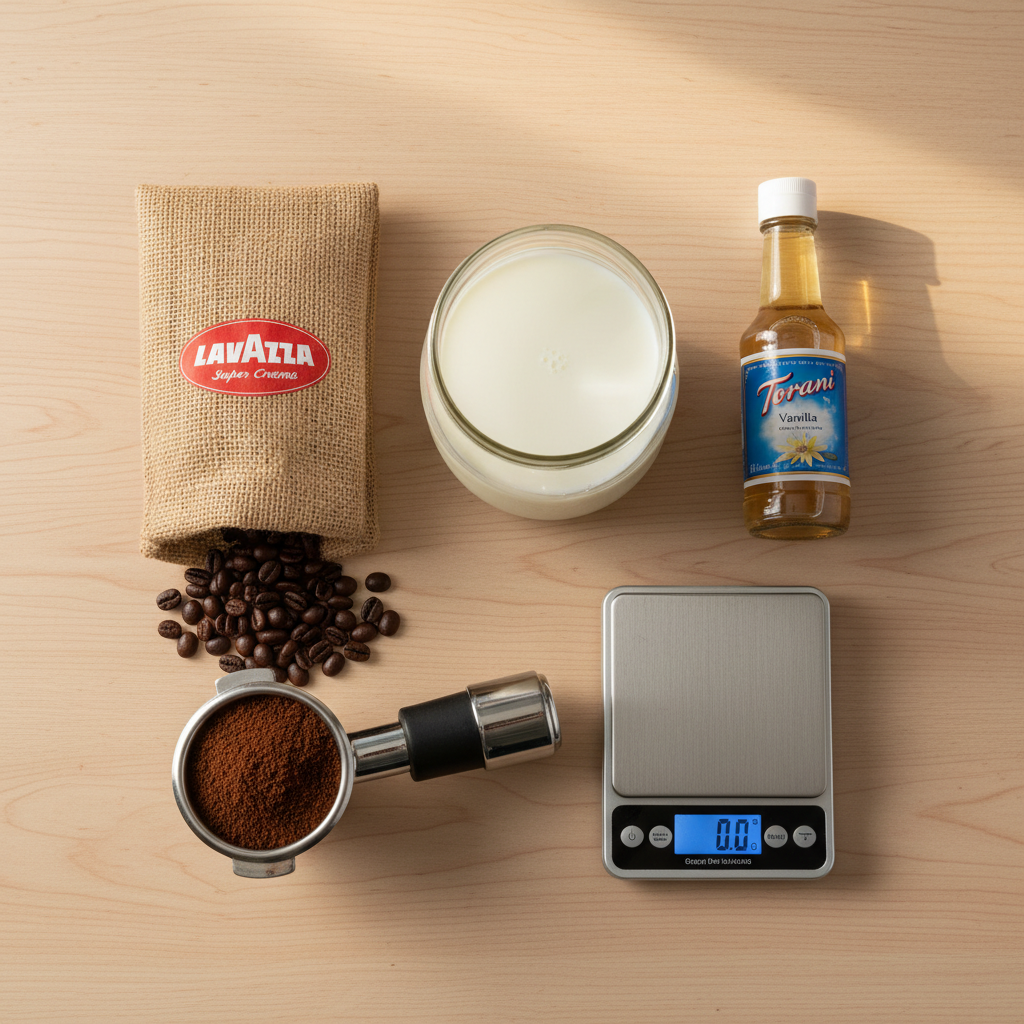
    Ingredients for How to Make a Latte at Home (With or Without a Machine)
    Everything you need — no specialty gear required.

    Ingredients You’ll Need

    You only need two core ingredients, but their quality defines your drink.

    • Espresso Coffee (18-20g or ~2 tbsp ground): Use a dark or medium-dark roast ground finely for espresso. Freshly ground beans are ideal. My go-to affordable brand is Lavazza Super Crema. For a substitution, any strong, finely ground coffee will work in a pinch.
    • Whole Milk (180 ml or 3/4 cup): Whole milk (about 3.25% fat) creates the richest, sweetest microfoam because of its protein and fat content. I use organic whole milk from a local dairy. For a non-dairy version that steams well, barista editions of Oatly or Califia Farms Oat Milk are formulated to foam.
    • Optional Sweetener (1 tbsp or 15 ml): Pure maple syrup, simple syrup, or Torani vanilla syrup integrate easily without gritty granules.

    Equipment (+ The No-Machine Path)

    You don’t need a $500 setup. Here’s what works.

    • Espresso Machine (with steam wand): The most direct path. A budget-friendly model like the Breville Bambino heats quickly.
    • No espresso machine? You have three reliable options. A Moka Pot makes strong, concentrated coffee. Use 18g of fine grounds and water to the fill line; it yields about 60ml of strong coffee. An AeroPress with a fine metal filter and 17g of fine grounds can make a convincing espresso-like concentrate. For ultimate simplicity, strong instant coffee like Starbucks Via Italian Roast (2 packets dissolved in 2 tbsp hot water) works in a pinch.
    • Milk Frother: A handheld electric frother ($15) works well. For stove-top steaming, a French press is brilliant: heat milk, pour it in, and pump the plunger vigorously for 30 seconds.
    • Digital Kitchen Scale: Weighing your coffee and milk is the single biggest accuracy upgrade you can make.
    • Thermometer: To stop heating milk at the ideal 150°F (65°C).

    Step-by-Step Technique Tips

    Follow the recipe card steps, but these insider tips guarantee success.

    First, preheat everything. Run hot water through your espresso portafilter or cup for 30 seconds. A cold vessel steals heat from your espresso, making it taste sour. While your espresso brews, heat your milk in a small saucepan or microwave-safe jar to 150°F (65°C). This temperature sweetens the milk’s natural sugars without scalding it. If you’re using a French press to froth, transfer the hot milk there and pump the plunger up and down vigorously for 30-45 seconds until the volume increases by about one-third and the foam looks glossy. Pour the milk immediately. Start by tilting your cup slightly and pouring from a height of about 3 inches to integrate the milk and espresso. For the final bit, bring the pitcher spout close to the surface to lay the white microfoam on top.

    What Goes Wrong (and How to Fix It)

    These are the most common home latte failures and my barista fixes.

    • Tastes watery or weak: Your espresso-to-milk ratio is off. You likely used too much milk or your ‘espresso’ wasn’t concentrated enough. Fix: Measure your milk (6 oz max) and ensure your Moka pot or AeroPress yields a full 2 oz (60ml) of strong concentrate.
    • Milk won’t foam or foam is bubbly/large: You’re using low-protein milk (like some almond milks) or didn’t introduce enough air. Fix: Use whole milk or a barista-formula oat milk. When frothing with a handheld wand, keep the tip just below the milk’s surface to create a gentle vortex and incorporate air slowly.
    • Espresso tastes bitter or burnt: Your water was too hot or your grounds were over-extracted. Fix: If using an espresso machine, ensure it’s at 195°F–205°F (90°C–96°C). If using a Moka pot, use pre-heated water and remove it from the heat as soon as you hear a gurgling sound.
    • Milk and coffee separate instantly: The temperatures were mismatched. Pouring cold milk over hot espresso causes separation. Fix: Heat your milk properly before frothing. The ideal final drink temperature is between 140°F–155°F (60°C–68°C).
    • Latte art is impossible: Your milk foam is too stiff or not integrated. Fix: After frothing, tap the pitcher firmly on the counter and swirl the milk to break large bubbles and create a shiny, paint-like texture before pouring.

    Variations

    Once you master the classic, try these.

    • Iced Latte: Pour 2 shots of espresso over a glass full of ice. Add 6 oz of cold milk (no frothing). Stir. This is the fastest summer drink.
    • Vanilla Latte: Add 1 tbsp (15ml) of vanilla syrup to your cup before pulling the espresso shot.
    • Cinnamon Dolce Latte (Starbucks Copycat): Add 1 tbsp cinnamon dolce syrup (Torani makes one) and top the finished drink with whipped cream and a sprinkle of cinnamon sugar.
    • Mocha Latte: Add 1 tbsp of chocolate syrup or 2 tsp of cocoa powder mixed into the hot espresso before adding milk.
    • Pumpkin Spice Latte: In your cup, mix 1 tbsp pumpkin purée, 1 tbsp pumpkin spice syrup, and 1/4 tsp of pumpkin pie spice. Add the espresso, stir well to dissolve, then add steamed milk.

    Make It Lighter (Lower Sugar or Dairy-Free)

    You can easily adapt this recipe for dietary needs. For a lower-sugar version, skip the syrup and rely on the natural sweetness of milk heated to 150°F. Use a sugar-free syrup brand like Jordan’s Skinny Syrups. For dairy-free, choose a ‘barista edition’ plant milk. These contain added stabilizers and fats that mimic dairy’s frothing properties. Oat milk is the crowd favorite for its creamy texture and neutral taste. Almond milk tends to be thinner and separates more easily when heated.

    Storage & Make-Ahead

    Lattes are best served immediately. However, you can prep components. Brewed espresso can be stored in a small airtight container in the refrigerator for up to 3 days. Reheat gently in a microwave for 15 seconds or pour it cold over ice. You can froth milk ahead of time, but it will separate as it sits. For a make-ahead iced latte, combine chilled espresso and cold milk in a sealed bottle or jar. Shake well before pouring over fresh ice. According to data compiled by Coffee Recipes, pre-chilling your espresso before adding it to an iced latte prevents the ice from melting too quickly and diluting your drink.

    ☕ Classic Homemade Latte

    A café-perfect latte with a 1:3 espresso to steamed milk ratio.

    Prep: 3 min  •  Total: 5 min  •  Serves: 1 drink  •  ~210 kcal

    Batch size:

    Ingredients

    • 2 shots (60 ml) espresso, or strong coffee concentrate
    • 6 oz (180 ml) whole milk
    • 1 tbsp (15 ml) vanilla syrup (optional)

    Instructions

    1. Preheat your cup by filling it with hot water. Let it sit while you prepare the espresso.
    2. Brew 2 shots of espresso (60 ml) directly into your preheated cup. If using a Moka pot or AeroPress, aim for 60 ml of strong concentrate.
    3. While the espresso brews, pour the milk into a steaming pitcher or small saucepan. Heat it to 150°F (65°C), using a thermometer.
    4. Froth the heated milk using your chosen method (steam wand, handheld frother, or French press) until it gains volume and has a glossy, microfoam texture.
    5. Tap the milk pitcher on the counter to pop large bubbles, then swirl it to integrate the foam.
    6. If using syrup, add it to the espresso now and stir.
    7. Hold the cup at a slight angle. Pour the frothed milk into the center of the espresso from a height of about 3 inches, aiming to mix the liquids.
    8. As the cup fills, lower the pitcher spout close to the surface to layer the remaining foam on top.

    Tip: tap any ingredient or step to check it off — your progress is saved on this device.

    Frequently Asked Questions

    Can I make a latte without an espresso machine?

    Yes. A Moka pot makes a strong coffee concentrate that works perfectly. An AeroPress with a fine metal filter or even 2 packets of strong instant coffee dissolved in 2 tbsp hot water are reliable, budget-friendly substitutes for espresso.

    What’s the difference between a latte and a cappuccino?

    The difference is in the milk texture and ratio. A cappuccino has equal parts espresso, steamed milk, and thick foam, resulting in a drier, frothier drink. A latte has more liquid steamed milk (a 1:3 ratio with espresso) and only a thin layer of microfoam on top, making it creamier.

    What milk is best for frothing for a latte?

    Whole milk (3.25% fat) is the gold standard because its protein creates stable foam and its fat adds richness and sweetness. For non-dairy, choose a ‘barista edition’ oat or soy milk, which are formulated with stabilizers to steam and froth like dairy.

    How do I make an iced latte?

    Fill a tall glass with ice. Brew 2 shots of espresso and let them cool for a minute (or use chilled espresso). Pour the espresso over the ice, then add 6 oz of cold milk. Stir. Do not steam or froth the milk for a traditional iced latte.

    Why is my homemade latte not as good as the coffee shop’s?

    The two most common reasons are the espresso-to-milk ratio (using too much milk dilutes the coffee) and milk temperature/texture. Ensure you’re using a 1:3 ratio and heating your milk to 150°F (65°C) before frothing to achieve the sweet, silky texture of a café latte.

    How many calories are in a homemade latte?

    A homemade latte with 2 shots of espresso and 6 oz of whole milk contains approximately 210 calories. Using 2% milk reduces it to about 180 calories, and unsweetened almond milk brings it down to roughly 100 calories, not including any added syrups or sugar.

    Can I make a latte ahead of time for the week?

    You can batch-brew espresso and store it in the fridge for up to 3 days. However, frothed milk separates and deflates quickly. For the best quality, froth milk fresh each time. For iced lattes, you can combine chilled espresso and cold milk in a jar and refrigerate for 1-2 days.

    What coffee beans are best for a latte?

    Use a medium to dark roast coffee bean, as the stronger, often chocolaty or nutty flavors stand up well to milk. A blend labeled ‘espresso roast’ from brands like Lavazza, Illy, or a local roaster is a safe bet. Coffee Recipes recommends grinding beans fresh just before brewing for the fullest flavor.

    More Coffee Recipes to Try


    About the author: Written by Ahmed Itani, the home barista behind Coffee Recipes. Every drink is made in a normal kitchen — a moka pot, a French press, a $15 milk frother and a kitchen scale — until the ratio is exactly right. Last updated 2026-08-12.