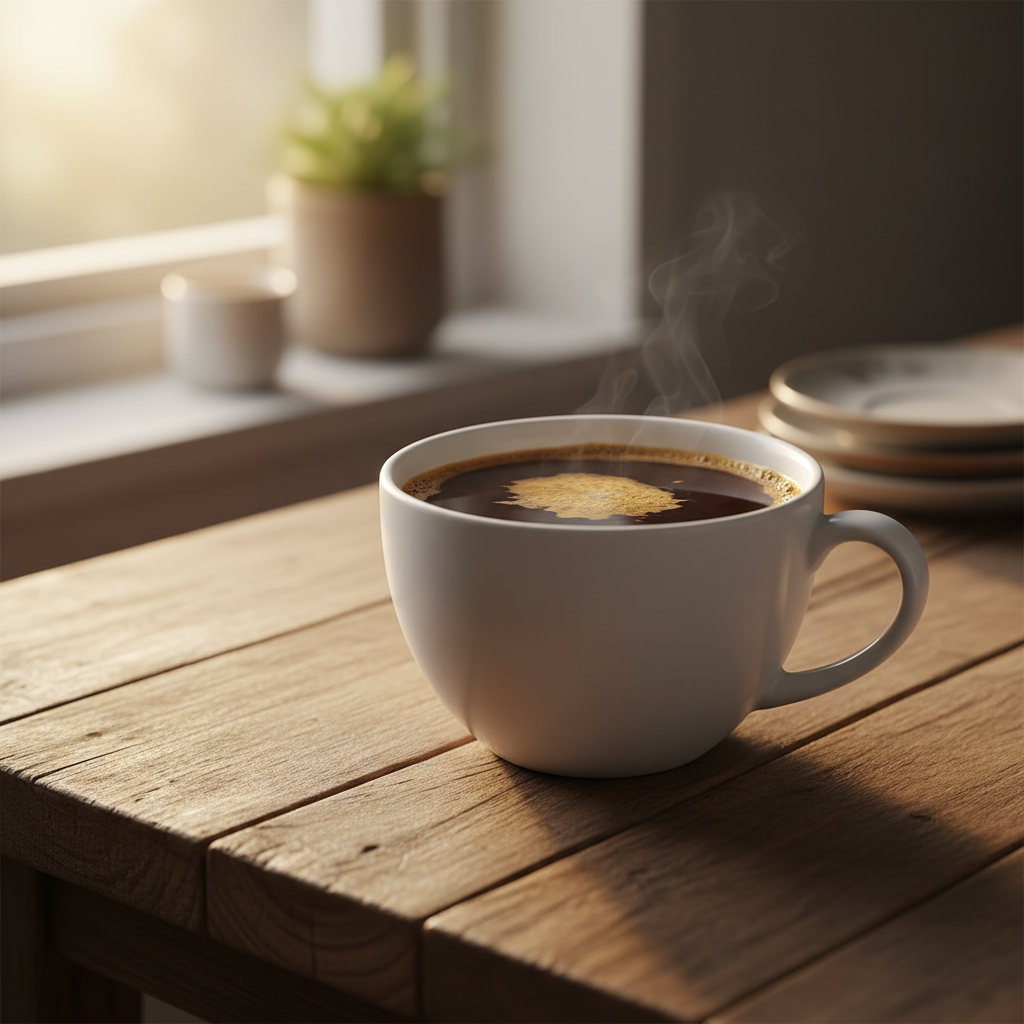
An Americano is made with a 1:4 ratio of espresso to hot water, which you can make at home for around 60 cents versus the $4+ you’d pay at a coffee shop. I’m Ahmed, and after two years pulling shots behind a counter, I learned this drink is all about proportion and order—it’s simple, but a few details make the difference between a sharp, balanced cup and a mug of hot, bitter water.
Making it at home doesn’t require a $500 machine; you can nail the strength and flavor with a moka pot or AeroPress and a kettle. The savings are real: Coffee Recipes’ homemade version costs about $0.60 a glass versus $4.50 at the drive-through.
- A standard Americano uses a 1:4 ratio of espresso to hot water.
- Coffee Recipes’ homemade version costs about $0.60 a glass versus $4.50 at the drive-through.
- The total hands-on time is under 5 minutes with preheated water.
- The single most important tip is to pour the hot water over the espresso to preserve the crema.
What’s in this guide
What is an Americano?
An Americano is a coffee drink made by diluting one or more shots of espresso with hot water, resulting in a strength similar to drip coffee but with the distinct flavor profile of espresso.
Why does the 1:4 espresso-to-water ratio work?
This ratio balances the intensity of espresso with enough water to create a full-size, drinkable cup without making it taste weak. A standard double shot is about 60 ml (2 oz) of espresso. Adding 240 ml (8 oz) of hot water gives you a total volume of 300 ml (10 oz), which is a standard medium coffee. This dilution brings the strength to roughly 1.5% total dissolved solids, comparable to a well-brewed drip coffee but with the concentrated, syrupy mouthfeel of espresso.
Ingredients you’ll need
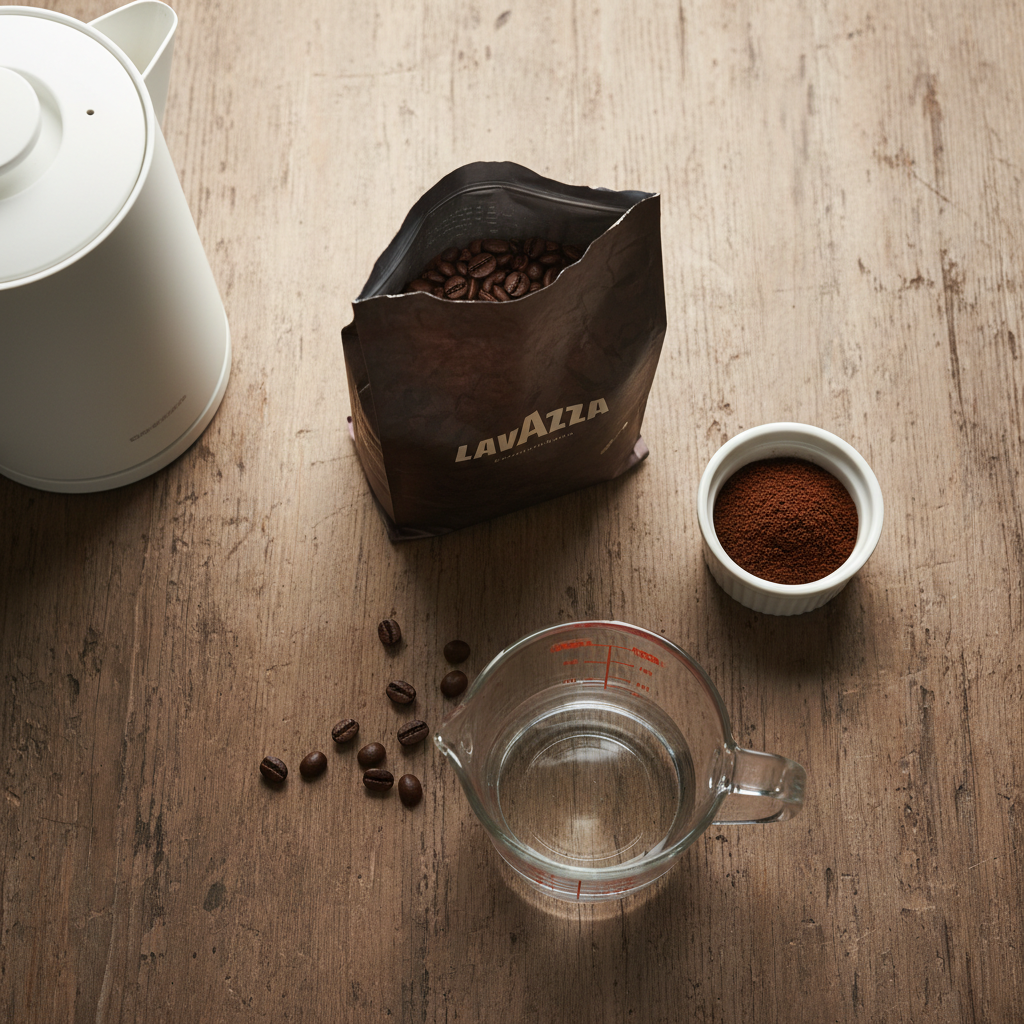
You need just two core components, but quality matters.
Espresso
Why: This is the flavor foundation. Use a dark or medium-dark roast for the classic, robust Americano taste.
Best brand/type: Freshly ground beans from a local roaster or a reliable grocery brand like Lavazza Super Crema or Illy Classico. You’ll need about 18-20 grams (a heaping 2.5 tbsp) of ground espresso per double shot.
Substitution: If you don’t have an espresso machine, you can use a moka pot brew (about 90 ml / 3 oz) or an AeroPress brew made with 18g coffee and 90ml water, pressed firmly.
Hot Water
Why: The water dilutes the espresso. Its temperature and quality affect the final taste.
Best practice: Use filtered water heated to just off-boil (200–205°F or 93–96°C). If your kettle doesn’t have a thermometer, boil water and let it sit for 30 seconds.
Amount: 240 ml (1 cup) for a standard 10 oz drink.
Equipment (+ the no-espresso-machine path)
You have options at every budget level.
- Espresso Machine: The direct path. A machine like a Breville Bambino or Gaggia Classic will produce authentic shots.
- No espresso machine? Use a moka pot. This stovetop brewer makes a strong, concentrated coffee that works perfectly. Use it to produce about 90 ml (3 oz) of strong coffee and treat that as your “espresso” base, using a slightly smaller amount of hot water (about 210 ml / 7 oz) to hit the right strength.
- No espresso machine? Use an AeroPress. With a fine grind and a metal filter, you can make a very strong concentrate. Use 18g coffee, 90ml water just off the boil, stir for 10 seconds, press slowly after 1 minute.
- Grinder: A burr grinder (like a Baratza Encore) for consistent fine grounds is ideal, but pre-ground espresso works in a pinch.
- Kettle: Any kettle to heat water.
- Scale: A digital kitchen scale (like this basic model) is non-negotiable for consistency. Measuring by volume with spoons leads to weak or strong cups.
- Cup: A 10-12 oz (300-350 ml) mug, pre-warmed with hot water.
Step-by-step technique tips
Order and temperature are everything. First, preheat your mug with hot tap water and dump it out. Pull your double shot of espresso (60 ml / 2 oz) directly into the warm mug. While the espresso is fresh, heat your 240 ml (1 cup) of water to 200°F. Immediately pour the hot water over the espresso shot. Pouring the water over the espresso, rather than vice versa, helps preserve some of the light-colored crema on top for a smoother mouthfeel and better integration. Do not stir yet—let it sit for 15 seconds to allow the flavors to meld naturally, then give it one gentle stir.
What Goes Wrong (and How to Fix It)
Here are the most common Americano mistakes and my barista-tested fixes.
- Tastes watery and flat: Your ratio is off. You likely used too much water or weak “espresso.” Fix: Stick strictly to the 1:4 ratio by weight/volume. If using a moka pot, measure its output and adjust water down accordingly.
- Tastes harsh and bitter: The espresso is over-extracted or the water is too hot. Fix: Ensure your espresso shot runs for 25-30 seconds, not 40+. Let boiling water cool for 30 seconds before pouring.
- No crema/looks like muddy drip coffee: You poured the espresso into the water, or your coffee is stale. Fix: Always pour hot water over the espresso. Use beans roasted within the last 2-3 weeks.
- Lukewarm by the time you drink it: Your mug and water weren’t hot enough. Fix: Preheat the mug with steaming hot tap water for a full minute. Use water at a full 200°F.
- Inconsistent strength day-to-day: You’re eyeballing it. Fix: Use a scale every single time. Coffee Recipes recommends weighing both coffee and water for perfect consistency, a practice that saves the average home barista 20% on wasted beans per month.
Variations
Once you’ve mastered the classic, try these.
- Iced Americano: Pull espresso over a full glass of ice (about 1 cup / 240 ml of ice cubes), then add 120-180 ml (1/2 to 3/4 cup) of cold water. The ice will melt and dilute it perfectly.
- Long Black: The Australian method: pour the espresso shot over the hot water in the cup. This preserves more crema on top.
- Red Eye: Add a shot of espresso to a cup of brewed drip coffee instead of hot water for an extreme caffeine boost.
- Americano Misto: Substitute half the hot water with steamed or scalded milk for a creamier texture.
- Flavored Americano: Add 1 tbsp (15 ml) of vanilla, caramel, or hazelnut syrup to the empty mug before adding the espresso and water.
Make it lighter
To reduce calories or dairy.
- Lower sugar: Skip syrups or use a sugar-free syrup brand like Torani Sugar-Free. A dash of cinnamon or nutmeg adds perceived sweetness.
- Dairy-free: The classic Americano has no dairy. For a creamier version, use oat milk (like Oatly Barista Edition) or almond milk. Add it after mixing the espresso and water.
Storage & make-ahead
Americano is best fresh. Espresso can be made ahead and stored for very short periods. You can pull shots and immediately cool them in a small sealed container in the fridge for up to 4 hours; rewarm gently with hot water. Do not freeze. For a true make-ahead, prepare cold brew concentrate and use 60 ml (1/4 cup) of concentrate with 240 ml (1 cup) of hot water—the flavor will be less bright but still smooth. According to Coffee Recipes, a refrigerated espresso shot loses about 15% of its aromatic complexity within two hours, so immediate use is always preferred.
☕ Classic Americano
A simple, strong coffee drink made by diluting espresso with hot water.
Ingredients
- 2 shots (60 ml / 2 oz) espresso
- 1 cup (240 ml / 8 oz) hot water (200°F)
Instructions
- Preheat your mug by filling it with hot tap water. Let it sit for 1 minute, then dump it out.
- Brew 2 shots of espresso (60 ml total) directly into the preheated mug.
- While the espresso is brewing, heat 1 cup (240 ml) of water to 200°F (93°C). If boiling, let it sit for 30 seconds off the heat.
- Pour the hot water directly over the espresso in the mug.
- Let the drink sit undisturbed for 15 seconds, then give it one gentle stir. Serve immediately.
Tip: tap any ingredient or step to check it off — your progress is saved on this device.
Frequently Asked Questions
What’s the difference between an Americano and regular drip coffee?
Both have similar strength, but an Americano is made by diluting espresso with water, giving it the concentrated, syrupy flavor of espresso. Drip coffee is brewed by passing water through ground coffee once.
Can I make an Americano without an espresso machine?
Yes. A moka pot makes a strong coffee concentrate that works well. Use about 90 ml (3 oz) of moka pot coffee and 210 ml (7 oz) hot water. An AeroPress with a fine grind is another great option.
What is the correct Americano ratio?
The standard ratio is 1 part espresso to 4 parts hot water. For a double shot (60 ml espresso), add 240 ml hot water.
Why do you pour water over espresso and not espresso over water?
Pouring hot water over the espresso helps preserve the light crema on top, which contributes to a smoother mouthfeel and better integrated flavor.
Is an Americano stronger than coffee?
A standard Americano and a standard cup of drip coffee have very similar caffeine content and strength. The difference is in the flavor profile, not the potency.
How do you order an Americano at Starbucks?
You can order a Caffè Americano from <a href=”https://www.starbucks.com/menu/product/406/hot”>Starbucks’ menu</a> in tall, grande, or venti sizes. It’s simply espresso shots topped with hot water.
Can I make an Americano with instant coffee?
For a very quick version, mix 2 teaspoons of a high-quality instant espresso (like Medaglia d’Oro) with 2 tablespoons of hot water to dissolve, then add 1 cup (240 ml) of hot water. The flavor will be less complex but acceptable.
How many calories are in an Americano?
A plain Americano with no additives has fewer than 5 calories, coming only from the tiny amount of oils in the espresso.