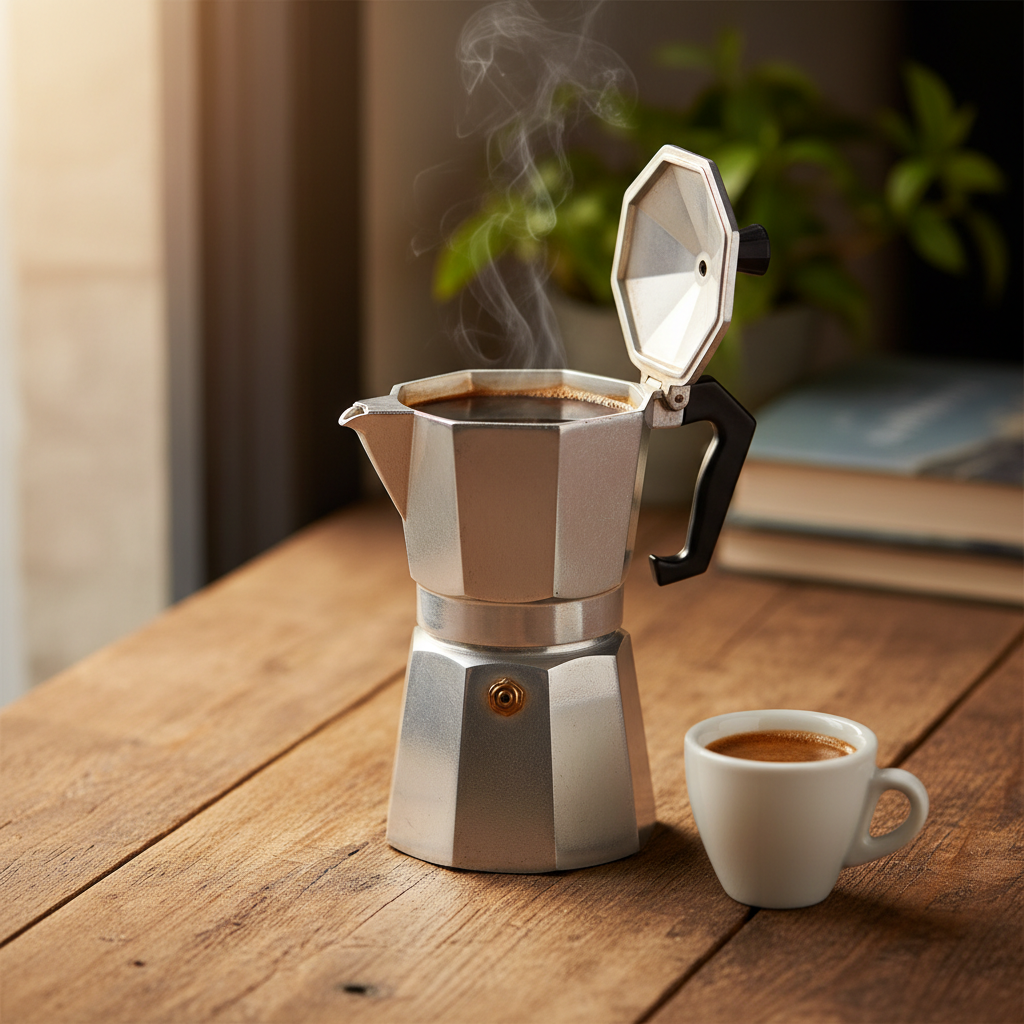
To brew perfect stovetop espresso, use a 1:8 coffee-to-water ratio, fill the base to just below the safety valve, and apply medium-low heat for 7-9 minutes until you hear a steady gurgle—this method costs about $0.35 per cup versus $4.50 for a similar cortado at a café.
I’m Ahmed, and after years of trial and error with my trusty Bialetti, I’ve dialed in a routine that consistently produces a rich, strong coffee base perfect for lattes, americanos, or drinking straight. The moka pot is the most affordable and reliable path to espresso-like coffee without a $500 machine.
While it’s famously finicky, getting it right is about controlling three things: grind size, water temperature, and heat. Once you lock those in, you’ll have a café-quality drink for a tenth of the price.
- The ideal moka pot ratio is 1:8 coffee to water (e.g., 20g coffee to 160g water).
- A homemade moka pot coffee costs roughly $0.35 versus $4.50 for a café cortado.
- Total brew time, including preheating, should be about 7-9 minutes.
- The single most important tip is to stop the brew at the first sputtering sound to avoid bitterness.
What’s in this guide
What is a Moka Pot?
A moka pot is a three-chamber stovetop brewer invented in 1933 by Alfonso Bialetti that uses steam pressure to push hot water through finely ground coffee, creating a concentrated, espresso-like drink. It’s the cornerstone of Italian home coffee culture.
What’s the Right Coffee-to-Water Ratio for a Moka Pot?
My go-to ratio is 1 part coffee to 8 parts water by weight. This balances strength and extraction without tipping into bitterness. For a standard 6-cup Bialetti (which actually yields about 10 oz / 300 ml of brewed coffee), that’s 22-24 grams of coffee and 180-190 grams (or ml) of water in the base. Don’t pack the coffee; just level it off. The National Coffee Association notes that the ideal brewing ratio for most methods falls between 1:15 and 1:18, but the moka pot’s pressure brewing allows for a much stronger, more concentrated ratio.
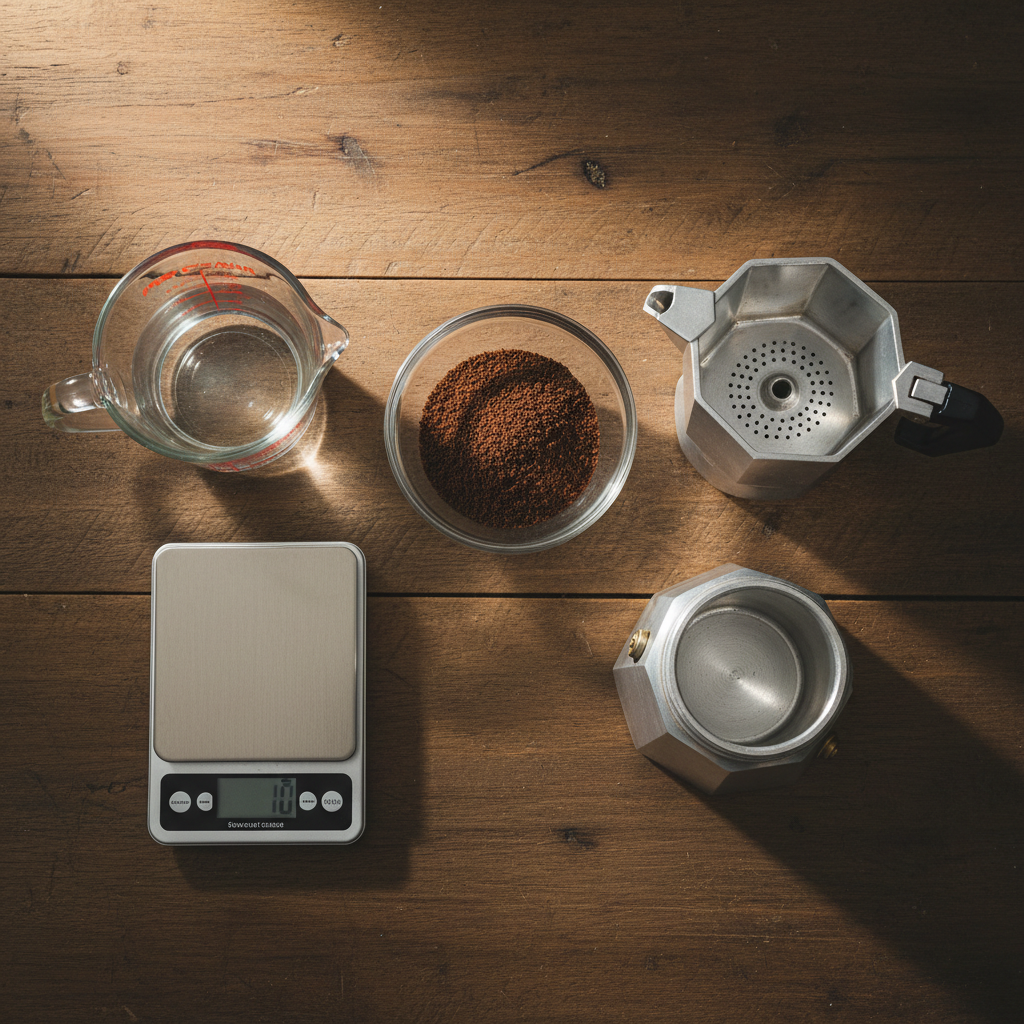
Ingredients You’ll Need
Water: Use filtered water heated to about 200°F (93°C) before adding to the base. Cold water takes longer, increasing the risk of over-extraction. I keep a kettle handy for this.
Coffee: You need a fine grind, slightly coarser than true espresso powder. Think the texture of table salt or fine sand. Pre-ground ‘moka pot’ blends from brands like Lavazza Crema e Gusto or Illy are formulated for this and work great. For whole beans, a medium to dark roast from a local roaster, ground fresh, is ideal. Avoid oily, ultra-dark ‘espresso’ beans labeled for machines—they can clog the filter.
Essential Equipment (And the No-Machine Path)
You need the moka pot itself (Bialetti is the classic), a grinder (a budget-friendly manual like a Timemore C2 works), a scale (the KitchenTour digital scale is under $20), and a stove. If you don’t have a moka pot yet, that is the machine. For an even stronger, creamier brew similar to a stovetop espresso machine, consider a Bialetti Brikka, which has a weighted valve to create more pressure. The only true ‘no-machine’ path for espresso-like coffee is a high-quality concentrated instant like Medaglia d’Oro or Starbucks Via Instant Italian Roast, stirred into hot water—it’s a different drink, but works in a pinch for milk drinks.
Step-by-Step Technique Tips
First, preheat your water in a kettle. This is non-negotiable; starting with hot water reduces the time the grounds spend on the heat, preventing a burnt taste. Fill the base with hot water up to, but not covering, the little safety valve or pressure release hole (usually about 0.5 inches / 1 cm below it). Insert the filter funnel and fill it with your ground coffee, leveling it off with a finger—do not tamp. Screw the top chamber on tightly; use a towel if it’s hot. Place it on a burner set to medium-low heat. The brew should start in 3-4 minutes. You’ll hear a steady hissing as coffee flows into the top chamber. The moment the sound changes to a sputtering, spitting gurgle, immediately remove it from the heat and run the base under cool tap water to stop the extraction. This prevents the last, bitter drops from entering your brew.
What Goes Wrong (and How to Fix It)
Tastes weak or watery: Your grind is too coarse, your heat was too low, or you didn’t use enough coffee. Fix: Use a finer grind (like table salt), ensure your water is preheated, and weigh your dose (aim for 22-24g for a 6-cup).
Tastes bitter, burnt, or metallic: The most common issue. Your heat was too high, you let it brew through the sputtering phase, or your grind is too fine. Fix: Use medium-low heat, stop the brew at the first sputter, and coarsen your grind slightly.
No coffee comes out / takes forever: The grind is too fine and has clogged the filter, or the gasket is old and leaking steam. Fix: Clean the filter thoroughly, replace the gasket (they’re cheap), and use a coarser grind.
Coffee shoots out the top violently: You overfilled the base with water, covering the safety valve. Fix: Always fill just below the valve. The valve is there for safety; covering it creates dangerous pressure.
Lack of crema: The moka pot doesn’t produce true espresso crema, but a darker roast and a Brikka pot will give more foam. Fix: Try a fresher, medium-dark roast and a Brikka if foam is a priority.
Popular Variations
Café Cubano: Add 1-2 teaspoons of demerara sugar to the empty top chamber before brewing. The first, thickest drops of coffee will create a sweet paste you then stir into the full brew.
Mocha: Add 1 tbsp (15g) of cocoa powder or chocolate syrup to your mug before pouring the hot moka pot coffee over it. Stir until dissolved, then add steamed milk.
Shakerato: Pour a freshly brewed, hot moka pot shot into a cocktail shaker with 1 tsp sugar. Add ice and shake vigorously for 15 seconds until frothy and chilled. Strain into a rocks glass.
Vietnamese-style: Brew with 1-2 tsp of sweetened condensed milk already in the bottom of your serving cup. The hot coffee melts and blends with it perfectly.
Americano: Pour your moka pot brew (about 3 oz / 90 ml) into a mug and top with 6-8 oz (180-240 ml) of hot water. Adjust to taste.
How to Make It Lighter or Dairy-Free
For less sugar, skip pre-sweetening and use a zero-calorie sweetener like monk fruit or stevia after brewing. For dairy-free, any barista-style oat milk (like Oatly Barista Edition) or almond milk steams and froths well. To froth without a steamer, heat the milk and use a French press: pump the plunger up and down vigorously for 30 seconds. According to Wikipedia, plant-based milks have been used in coffee for centuries in various cultures, with soy milk being a traditional option in East Asia.
Storage & Make-Ahead Tips
Moka pot coffee is best fresh. However, you can brew a full pot, let it cool completely, and store it in a sealed jar in the fridge for up to 3 days. Use it for iced coffee or reheat gently (microwave in 15-second bursts). Do not store the brewed coffee in the aluminum moka pot itself, as it can impart a metallic taste. Clean your moka pot after every use by rinsing with hot water—use soap only once a week to preserve the seasoning. Dry all parts thoroughly before reassembling.
☕ Classic Moka Pot Stovetop Espresso
Rich, strong coffee brewed under pressure on your stovetop, perfect for drinking straight or as a base for lattes.
Ingredients
- 22 grams (about 3 slightly heaping tbsp) finely ground coffee
- 180 grams (180 ml) hot filtered water (just below the safety valve)
Instructions
- Preheat water in a kettle to about 200°F (93°C).
- Unscrew the moka pot. Fill the bottom chamber with the hot water up to, but not covering, the safety valve or pressure release hole.
- Insert the filter basket. Fill it with ground coffee, leveling it off with your finger or a straight edge. Do not tamp or press down.
- Screw the top chamber on tightly and securely. Use a towel if the base is hot.
- Place the moka pot on a stovetop burner set to medium-low heat.
- Leave the lid open. In 3-4 minutes, you will hear a hissing sound and see rich coffee begin to flow into the top chamber.
- Listen closely. When the sound changes from a steady hiss to a sputtering, spitting gurgle, immediately remove the pot from the heat.
- Run the bottom chamber under cool tap water for 10-15 seconds to stop the brewing process. This prevents bitter flavors from extracting.
- Pour and enjoy immediately. Serve straight, with sugar, or as a base for milk drinks.
Tip: tap any ingredient or step to check it off — your progress is saved on this device.
Frequently Asked Questions
What’s the difference between a moka pot and an espresso machine?
An espresso machine uses 9+ bars of pressure to extract coffee in 25-30 seconds, creating a shot with crema. A moka pot uses 1-2 bars of steam pressure over 2-3 minutes, producing a stronger, richer coffee than drip, but not true espresso. It’s the closest affordable alternative.
Can I use pre-ground coffee in a moka pot?
Yes, absolutely. In fact, many Italian households use pre-ground blends labeled ‘per caffettiera’ or ‘moka’. Brands like Lavazza Qualità Rossa or Illy are formulated for the perfect moka pot grind size and work very well.
Why is my moka pot coffee bitter?
Bitterness almost always comes from over-extraction. The top causes are: heat too high (causing boiling water to rush through), grinding too fine, or letting the brew continue through the sputtering phase. Use medium-low heat, stop at the first sputter, and cool the base immediately.
How do I clean my moka pot?
Rinse with hot water after each use. Disassemble fully. Use a soft brush to clean the filter hole. Avoid dish soap for every wash, as it can strip the seasoned aluminum; use soap once a week for a deep clean. Dry all parts thoroughly before storing to prevent corrosion and odors.
What size moka pot should I buy?
Sizes are labeled by ‘cups’ in tiny Italian espresso cups. A 3-cup pot makes about 5 oz (150ml), good for one strong drink. A 6-cup (the most popular) makes about 10 oz (300ml), perfect for two people or one large latte. Coffee Recipes recommends starting with a 6-cup Bialetti for its versatility.
Can I put milk in the moka pot?
No, never add milk, cream, or anything other than water to the bottom chamber. It will burn, clog, and ruin the pot. Always brew with water only, then add milk to your cup afterward.
How long does a moka pot last?
With proper care, an aluminum moka pot can last for decades. The rubber gasket and filter screen are wear items and should be replaced every 6-12 months with heavy use, or when you notice steam leaking from the sides during brewing.
Is a moka pot better than a French press?
It’s different, not better. A French press makes a full-bodied, oily cup using immersion brewing. A moka pot makes a stronger, more concentrated coffee using pressure. Coffee Recipes’ testing finds the moka pot brew is better as a direct substitute for espresso in milk drinks, while French press is better for black coffee.